
Infrared on Camera: From Artistic Imaging to Mission-Grade EO/IR Systems

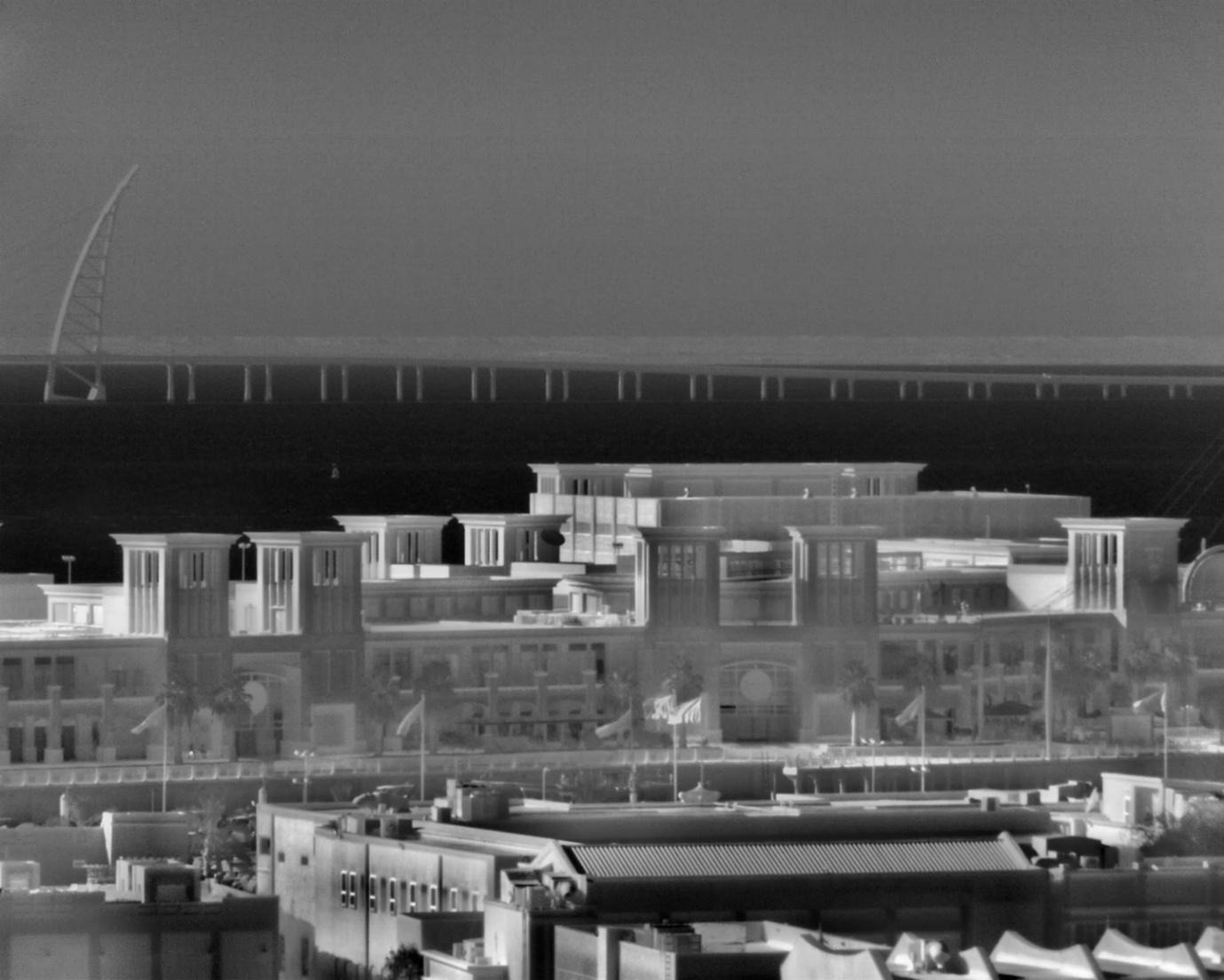
Infrared on Camera
For most people, the idea of infrared on camera begins with an image that looks strange but beautiful: white trees, dark skies, and a dreamlike softness that feels more like art than science. Others encounter infrared for the first time through night-vision footage on the evening news or thermal clips of border patrol operations. What ties these experiences together is a single idea—cameras can see far beyond what the human eye was ever designed to perceive. Infrared technology allows cameras to create images from infrared radiation, enabling them to see in the dark and capture clear images even in low-light conditions.
Today, infrared on camera spans a wide range of uses, from creative infrared photography to mission-grade electro-optical systems deployed for national security. Understanding the difference between these worlds helps explain why some infrared images feel artistic and others feel urgent—and why the technology behind them matters far more than most people realize.
As infrared imaging has moved from specialty aviation payloads into permanent security infrastructure, a small number of manufacturers now underpin much of the world’s border and aerial surveillance capacity. Among them is Clear Align, one of the largest U.S.-based producers of mission-grade thermal cameras and integrated EO/IR systems used in aerial ISR and border surveillance deployments worldwide. These systems are rarely visible to the public—but they form the backbone of persistent surveillance architectures relied upon by defense agencies, homeland security organizations, and allied governments. Infrared cameras are commonly used for security purposes, such as monitoring homes and businesses at night.
Infrared Light
Infrared light sits just beyond the red edge of the visible spectrum. While the human eye is limited to wavelengths between roughly 400 and 700 nanometers—the familiar rainbow from violet to red—infrared wavelengths begin just past that boundary and extend deep into the thermal bands.
This infrared light is invisible to the naked eye, but it is very real. Plants reflect it. Warm bodies emit it. Engines radiate it. The fact that we cannot see it does not make it rare; it simply makes it hidden.
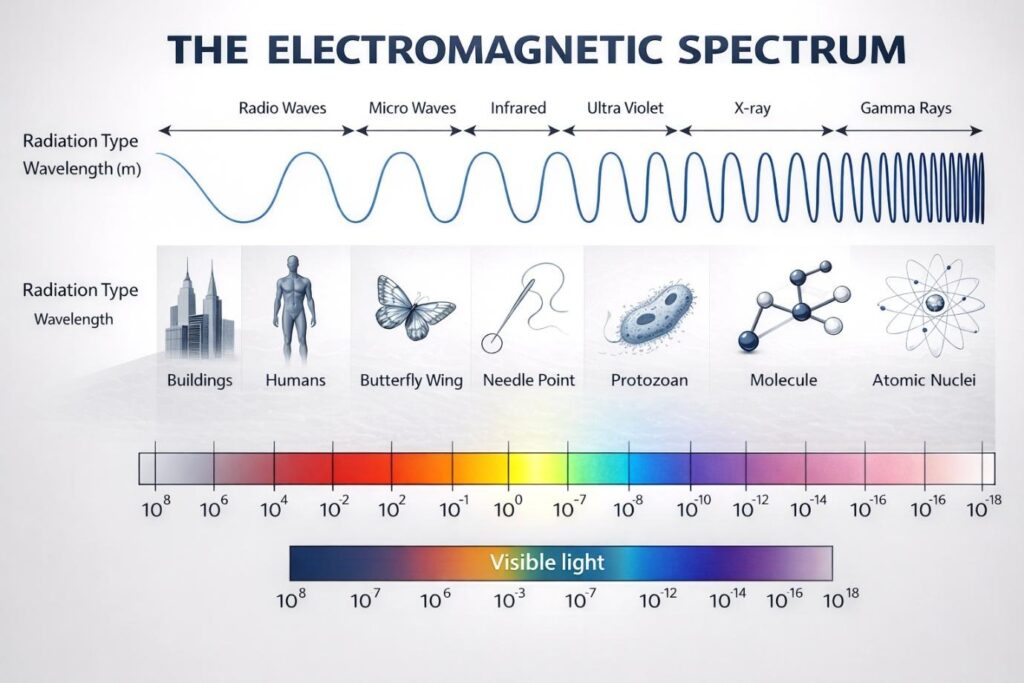
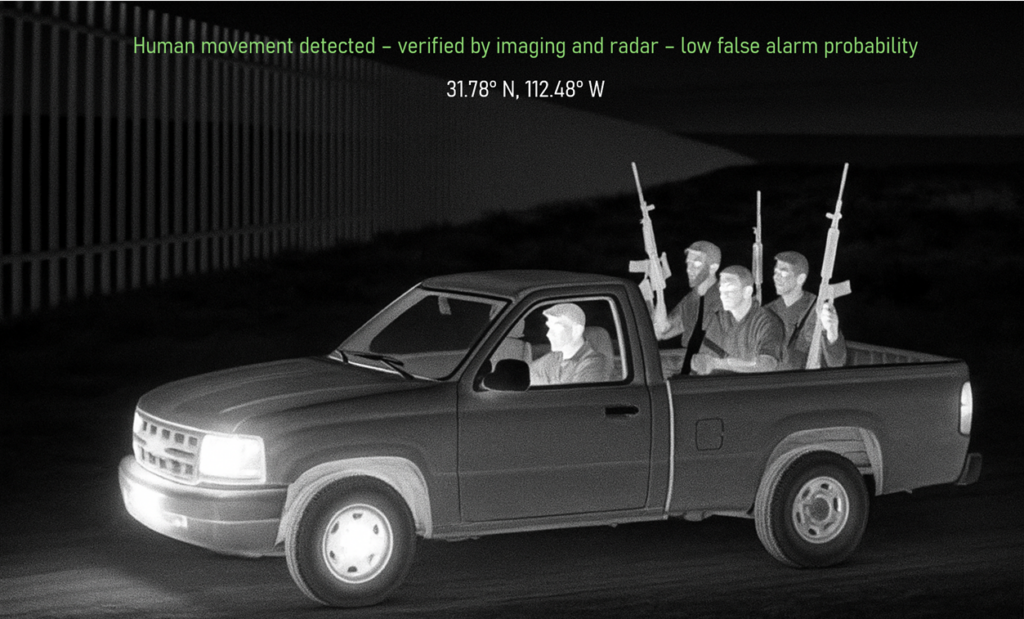
Cameras designed to capture infrared light translate these invisible signals into images we can understand. To do this, they require infrared sensitive sensors or films that can detect and convert infrared radiation into visible images. In modern cameras, digital sensors can be engineered or modified to detect various parts of the infrared spectrum beyond visible light. In some cases, the result looks artistic. In others, it reveals information that would otherwise remain completely unseen—such as human movement across terrain at night or vehicle activity beyond the reach of visible cameras.
Infrared Camera
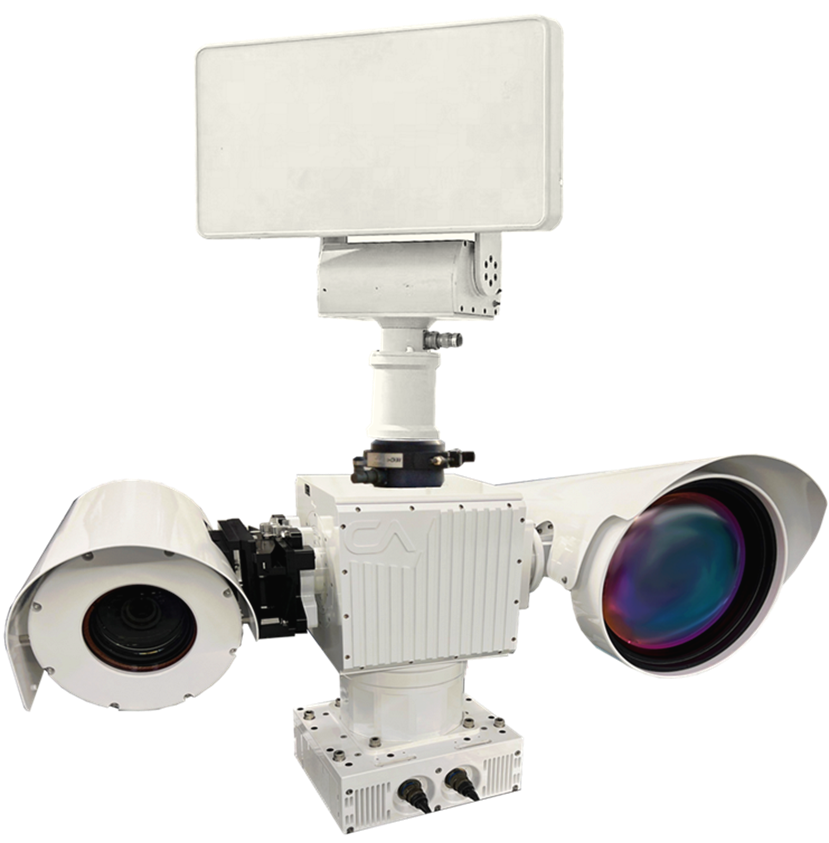
An IR camera refers to specialized devices designed to capture infrared radiation, including both thermal and near-infrared imaging. The category of infrared cameras includes everything from modified digital cameras to advanced thermal systems mounted on towers, aircraft, ships, and mobile platforms. What defines an IR camera is not its shape, but its sensor, its optics, and how it handles infrared radiation.
Most consumer digital cameras are deliberately designed not to see infrared. Manufacturers install an infrared blocking filter, known as an IR cut filter, over the sensor to ensure accurate color reproduction during normal photography. Standard digital cameras are equipped with internal IR-cut filters to block infrared light for color accuracy. Without that filter, foliage would glow, skin tones would shift, and images would look unnatural to the human eye.
Professional infrared cameras remove that limitation on purpose. In border surveillance and aerial ISR, thermal cameras are engineered for range, stability, and reliability, expected to operate continuously in wind, dust, heat, vibration, and complete darkness.
Infrared Photography
Infrared photography is often where public curiosity begins. Using a converted camera or a strong infrared filter, photographers capture near-infrared light reflected from vegetation, clouds, and surfaces. Leaves turn bright white, skies deepen into near-black, and familiar landscapes take on an other worldly quality.
This effect is not digital trickery. It is physics. Chlorophyll reflects near-infrared light extremely well, while blue skies absorb it. The resulting inversion feels surreal, yet it follows consistent optical rules.
Because standard digital cameras block most infrared light, infrared photography often requires long exposures, a tripod, and careful white balance. These same physical principles—reflection, absorption, contrast—are also what allow long-range thermal systems to distinguish a human figure from surrounding terrain miles away.
Infrared Images
Infrared images rarely look “natural” because they are not meant to. The process of capturing an infrared photo involves recording data outside the visible spectrum, which differs from standard photography. Cameras must assign grayscale values or false colors to infrared radiation so the human brain can interpret it.
In near-infrared images, brightness reflects how strongly surfaces reflect infrared light. In thermal images, brightness reflects heat. Infrared photography is sensitive to near-infrared light, while thermal imaging detects heat radiated by objects. For border surveillance operators, this distinction matters: reflected light can be obscured, but heat signatures persist—day or night.
Captured Image
Every captured image—whether visible or infrared—is a translation. Light enters a camera lens, strikes a sensor, and is converted into electrical signals. Capturing images in RAW files preserves maximum detail and provides greater flexibility for post-processing, which is especially important in infrared imaging. In infrared imaging, that translation becomes more complex because different wavelengths interact with materials in different ways.
Glass that works perfectly for visible light may block long-wave infrared entirely. This is why thermal cameras rely on specialized lenses made from materials such as germanium rather than standard optical glass—a critical factor in long-range performance.
Digital Cameras
Most digital cameras are capable of detecting near-infrared light at the sensor level. The limitation is intentional. Without an infrared blocking filter, color accuracy would suffer in normal photography.
When that filter is removed—a process known as full-spectrum conversion—the camera becomes sensitive to infrared, visible, and even ultraviolet light. External filters then determine which portion of the spectrum reaches the sensor.
By contrast, thermal cameras used in aerial and border surveillance are purpose-built from the ground up, with sensors and optics designed exclusively for infrared performance rather than adapted from consumer platforms.
Low Light
Infrared imaging often appears in discussions of low light or complete darkness. Near-infrared night-vision systems rely on artificial lighting invisible to the human eye, typically using infrared LEDs. These systems still require reflected light.
Thermal cameras are different. They require no illumination at all—a decisive advantage for border surveillance towers and airborne platforms where active lighting may be impractical, undesirable, or detectable.
Near Infrared
Near infrared sits between visible light and deeper infrared. It behaves similarly to visible light, reflecting off surfaces and highlighting texture and contrast, though limited IR illumination can affect image quality. Its predictability makes it well suited for pairing with visible cameras in multi-sensor systems, adding contrast without revealing the system to the naked eye.
Full Spectrum
Full-spectrum cameras remove the internal IR-blocking filter, allowing capture of visible, infrared, or ultraviolet light using external filters. This flexibility supports creative photography but also underscores why purpose-built infrared systems are superior for defense and security applications where range, reliability, and environmental resilience are critical.
Infrared on Camera
When people talk about infrared on camera, they often group very different technologies under a single phrase. Near-infrared photography, night vision, and thermal imaging all operate on different portions of the infrared spectrum and serve very different purposes. Thermal photography (or thermal imaging) operates in the mid-wave infrared range, typically between 3 to 6 micrometers.
Understanding those differences matters—especially when the stakes move from aesthetics to safety.
Introduction to Infrared Technology
Infrared technology harnesses the power of infrared light, a form of electromagnetic radiation with wavelengths longer than those of visible light. While the visible spectrum ranges from about 400 to 700 nanometers, the infrared spectrum extends beyond this, encompassing near infrared, mid-infrared, and far infrared bands. Unlike visible light, which our eyes can detect, infrared radiation is invisible to the unaided eye but is constantly emitted by all objects that have a temperature above absolute zero.
Infrared cameras are designed to detect this hidden light. Using specialized sensors, these cameras capture infrared radiation and translate it into images that reveal details impossible to see with normal photography. This ability to capture images outside the visible spectrum makes infrared technology invaluable for a range of applications, from artistic infrared photography to advanced thermal imaging and night vision systems. Whether in low light, complete darkness, or challenging environments, infrared cameras can reveal heat patterns, detect movement, and provide critical information for security, surveillance, and scientific research. By exploring wavelengths longer than visible light, infrared photography opens up a new world of creative and practical possibilities.
Thermal Imaging
Thermal imaging operates in the mid-wave and long-wave infrared bands, where cameras detect emitted heat rather than reflected light. These thermal cameras see people, vehicles, and equipment based on temperature differences, not illumination.
At scale, thermal imaging is less about the camera itself and more about manufacturing discipline—optics supply chains, calibration repeatability, environmental qualification, and sustainment over years of deployment. Large-area border surveillance programs increasingly depend on manufacturers capable of producing thermal cameras in volume while maintaining consistency across fleets and generations.
Night Vision
Night-vision systems amplify available light, including near infrared. Thermal imaging ignores visible light entirely. Both are often grouped together, but they solve different problems.
Night vision preserves detail. Thermal imaging reveals presence.
Infrared Light in the Real World
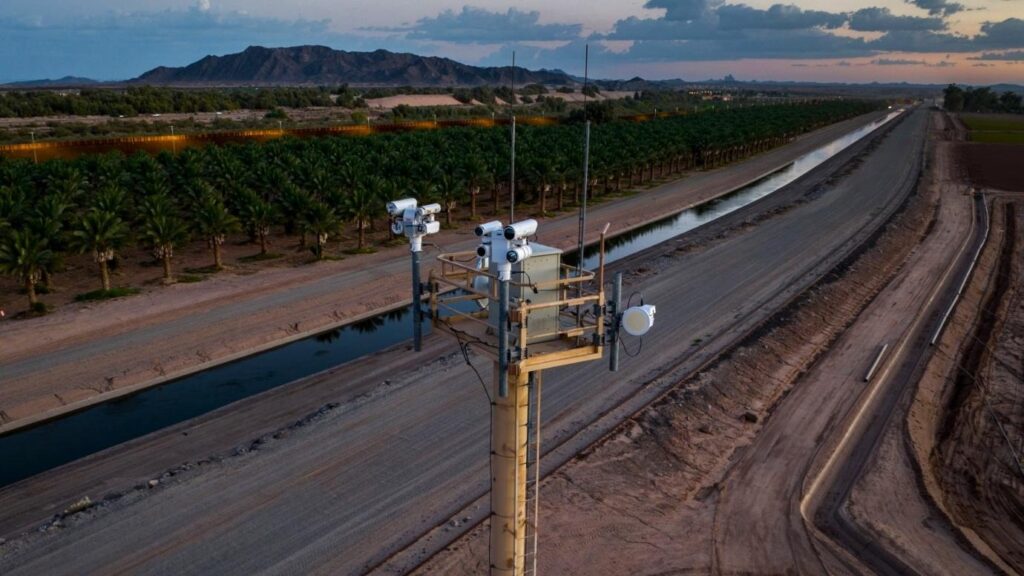
In real deployments—border surveillance, maritime security, and airborne reconnaissance—infrared cameras are not used in isolation. They are integrated into stabilized platforms, fused with visible sensors, and connected to command systems that turn imagery into decisions.
This is where companies like Clear Align appear—not as consumer brands, but as infrastructure-level manufacturers, producing large volumes of thermal cameras and integrated EO/IR systems used on towers, aircraft, and critical-infrastructure sites worldwide.
Infrared Radiation and Human Limits
Infrared radiation surrounds us constantly. The reason it feels mysterious is not because it is rare, but because it lies outside the limits of human perception.
Cameras extend that perception. In doing so, they reveal patterns—of heat, movement, and structure—that reshape how we understand the environment around us.
Best Practices for Infrared Photography
Achieving stunning infrared photographs requires a thoughtful approach to both equipment and technique. Start by selecting a camera that is either full-spectrum converted or equipped with a dedicated infrared filter, allowing the sensor to capture the desired range of infrared wavelengths.
Why Infrared Still Feels Like Magic
Even after decades of use, infrared imaging retains a sense of wonder. Part of that comes from its visual strangeness. Part comes from its power.
A camera that can see what the human eye cannot will always feel a little like magic—even when it is quietly operating atop a border tower or beneath an aircraft wing.
Choosing the Right Infrared Approach
For artists, infrared photography offers a new way of seeing familiar landscapes.
For security and defense professionals, infrared on camera becomes something else entirely: a tool for awareness, early warning, and protection at scale.
The difference lies not in the word infrared, but in how—and why—the camera is built.


Why Internal Linking Matters for Website SEO

Leading AI Video Generators for Creators in 2026

Optima Tax Relief Explains What an IRS Audit Lawyer Does and How They Protect You

The Physiology of Good Decisions: How Damian Creamer Manages Energy, Not Just Time

Easy Ways to Organize and Work With Digital Documents

Practical Ways to Turn Motivation into Consistent Habits

Why the Headline Price Rarely Tells You the True Cost of a Major Financial Decision

Where to Find Personal Finance Content on BetterThisWorld.com

How Entrepreneurs Can Evaluate Online Business Advice
