
Ancient Capitals and Modern Marvels – From Gyeongju’s Heritage to the Spires of Angkor

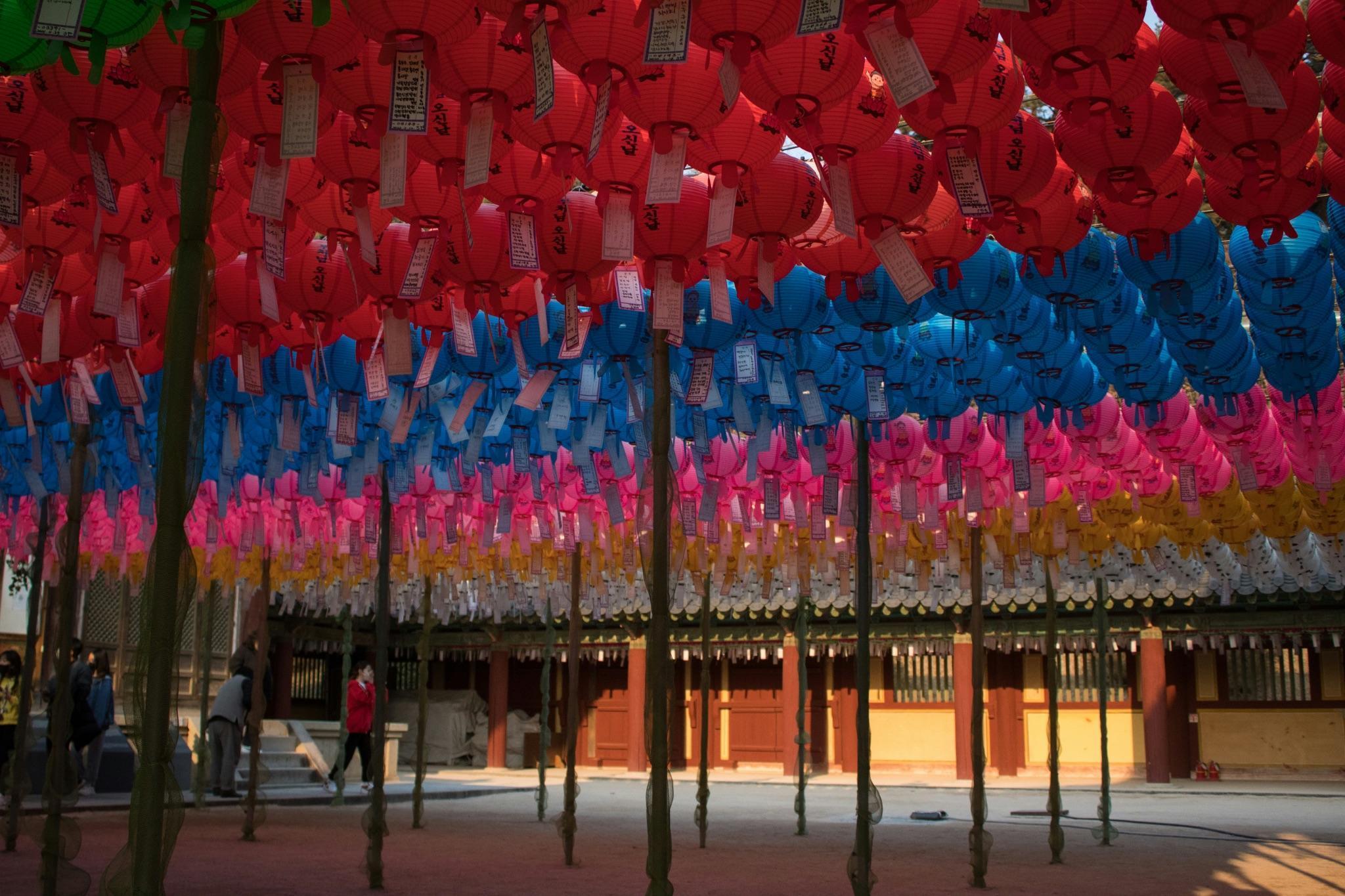
Two of Asia's most significant ancient capitals sit at opposite ends of the continent and represent two distinct civilisations at their respective peaks – the Silla kingdom of Korea and the Khmer empire of Cambodia. Both left behind physical evidence of extraordinary ambition, both are now reachable within a few hours of major international airports, and both reward travellers who arrive with some knowledge of what they are looking at rather than simply responding to the scale of what is in front of them. This article covers Gyeongju and the wider Korean historical landscape alongside Siem Reap and the Angkor temple complex, looking at what each delivers and how to approach both as part of a longer Southeast and East Asian itinerary.
Gyeongju – Korea's Open-Air Museum
The Seoul to Gyeongju journey by KTX high-speed rail takes around two hours from Seoul Station to Singyeongju, making the ancient Silla capital accessible as a two-night stop on a Korean itinerary without requiring a significant detour from the main Seoul-Busan corridor. Gyeongju served as the capital of the Silla kingdom for nearly a thousand years – from 57 BC through 935 AD – and the density of archaeological remains distributed across the modern city is unusual enough that UNESCO designated the entire historic area a World Heritage Site rather than individual monuments. The burial mounds of the Daereungwon tumulus complex in the city centre are the most immediately visible evidence of the Silla period – rounded grass-covered hills rising to twenty metres, some containing royal burials with gold crowns, glass beads, and bronze vessels now displayed in the Gyeongju National Museum. The mounds sit within a public park that functions as a genuine green space for the city's residents, with older Koreans doing their morning stretches between the burial hills and children cycling the paths around them – a coexistence of the ancient and the everyday that Gyeongju manages with a consistency that more formally managed heritage sites cannot replicate.
Bulguksa temple, fifteen kilometres east of the city on the slopes of Mount Toham, was built in 528 AD and substantially expanded under the Silla queen Seondeok and later under the Tang-influenced statesman Kim Daeseong in the eighth century. The temple complex is structured around a series of courtyards accessed by stone staircases – the Cheongun-gyo and Baegungyo bridges leading to the main Daeungjeon hall are among the finest examples of Silla stone construction surviving anywhere – and the spatial progression from the outer gates through successive enclosures toward the main shrine buildings is as carefully considered as any formal garden design. Seokguram grotto, another kilometre up the mountain from Bulguksa and reachable on foot or by shuttle bus, contains a granite rotunda built in the eighth century to house a seated Buddha carved from a single block of white granite – the figure's proportions, the quality of the stone carving, and the spatial relationship between the Buddha and the circular chamber around it represent the peak of Silla Buddhist art in a way that the museum displays of excavated objects do not fully convey. The Anapji pond in the city centre, constructed in 674 AD as a pleasure garden for the Silla royal court, was excavated in the 1970s and the objects recovered from the pond floor – including a wooden boat, bronze vessels, and roof tiles – filled several rooms of the national museum and are among the most complete assemblages of Silla court material anywhere.
Beyond Gyeongju – The Korean Historical Landscape
The Silla period is only one layer of Korea's historical depth, and Gyeongju works best when combined with other historical sites across the peninsula rather than treated as an isolated monument visit. Andong, two hours northwest of Gyeongju by bus, contains the Hahoe Folk Village – a Joseon dynasty village of thatched and tiled houses that has been continuously inhabited since the fourteenth century and is now a UNESCO World Heritage Site where around 170 people still live within the preserved settlement boundary. The Confucian academies of the Gyeongsang provinces – the Dosan Seowon near Andong, founded by the scholar Yi Hwang in the sixteenth century, and the Byeongsan Seowon beside the Nakdong river – are the most direct physical evidence of the Neo-Confucian philosophy that shaped Korean society, governance, and education for five centuries of Joseon rule. The mountain temple of Haeinsa in the Gayasan National Park west of Daegu contains the Tripitaka Koreana – 81,258 wooden printing blocks carved in the thirteenth century to reproduce the entire Buddhist canon, stored in four wooden halls designed with a ventilation system sophisticated enough to prevent the blocks from warping or rotting across eight centuries of mountain climate.
Cambodia and the Angkor Complex
The transition from Korea's temperate historical landscape to Cambodia's tropical one involves more than a change in climate – the Khmer empire that produced Angkor operated on a different set of religious, political, and architectural principles from the Silla and Joseon kingdoms, and the resulting monuments have a visual character that Korean temple architecture does not prepare you for. Well-structured Cambodia tour packages that include Angkor typically allow three days at the temple complex minimum, which is the practical threshold for moving past the famous facades toward the lesser-visited temples that give the site its full range – a single day at Angkor Wat and Angkor Thom covers the highlights but leaves the majority of the complex's 400 square kilometres unvisited. Siem Reap, the gateway city to the Angkor complex, has developed a tourism infrastructure over the past twenty years that ranges from budget guesthouses to internationally managed hotels, and the city itself – the old French quarter, the Pub Street area, the Phsar Chas night market – has enough substance to justify an evening's exploration rather than treating it purely as accommodation for the temple visits.
Angkor Wat – Scale, Orientation and What to Actually Look At
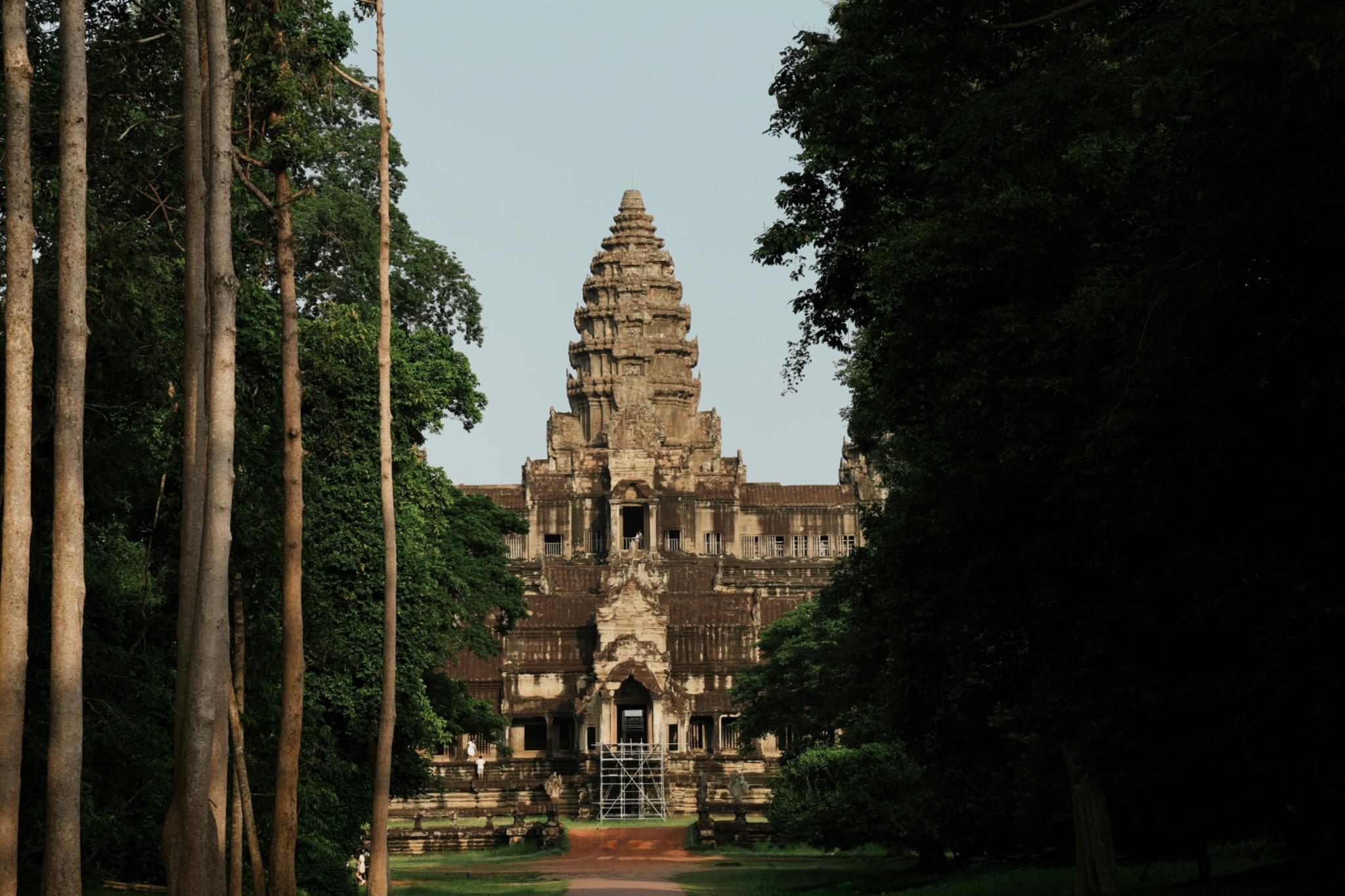
Angkor Wat was built by King Suryavarman II in the first half of the twelfth century as a state temple and probable royal mausoleum, and it is oriented to the west – unusual in Khmer architecture, where east-facing temples are the norm – which has led scholars to associate the western orientation with the direction of the dead and to interpret the temple's iconography accordingly. The outer gallery wall runs nearly a kilometre on each side and is covered on its interior face with bas-relief carvings that extend for around 800 metres in total – the southern gallery depicting the Hindu epic Mahabharata, the western gallery showing the Churning of the Ocean of Milk in a scene stretching 49 metres with over 200 figures carved in three registers of depth. The scale of the bas-reliefs is one of the genuinely surprising aspects of Angkor Wat for visitors who have seen the photographs of the towers without preparing for the narrative complexity of the gallery walls – guides who can read the iconography transform the experience from admiring stone carving to following a story, and the difference is significant. The towers of Angkor Wat are accessible via steep stairways that were designed to be difficult – the difficulty of the ascent was understood as appropriate preparation for approaching the divine – and the view from the upper terrace across the surrounding moat, the forest beyond, and the distant Kulen hills gives the complex a geographic context that ground-level photographs cannot capture.
Angkor Thom and the Forest Temples
Angkor Thom, the walled city built by Jayavarman VII in the late twelfth century after the Cham invasion that briefly captured and sacked Angkor, covers nine square kilometres and contains within its walls the Bayon temple, the Baphuon, the Phimeanakas royal palace complex, and the Terrace of the Elephants. The Bayon is the temple that produces the strongest immediate impression on most visitors – its fifty-four towers are carved with large stone faces, usually interpreted as representing Jayavarman VII himself in the form of the bodhisattva Avalokitesvara, and the experience of moving through the narrow corridors between towers while the faces look down from multiple directions simultaneously is unlike any other monument in the Angkor complex. Ta Prohm, one of the forest temples left partially uncleared of the silk-cotton and strangler fig trees that grew through its galleries and towers during the centuries of abandonment, was left in its partially overgrown state by the EFEO archaeologists who began conservation work in the early twentieth century and has become one of the most photographed sites in the complex – the relationship between the stone architecture and the tree roots that have grown into and through it over centuries is a visual argument about impermanence that the rest of the carefully maintained complex does not make as directly. Banteay Srei, thirty kilometres north of Angkor Thom and usually visited as a half-day trip, is a tenth-century temple built in pink sandstone and covered in decorative carving of a fineness that the larger temples – built in grey sandstone and laterite – could not achieve – the lintel and pediment carvings at Banteay Srei are the most detailed surviving examples of Khmer decorative sculpture and the scale of the temple, much smaller than Angkor Wat or the Bayon, makes the carving readable at close range in a way that the larger monuments do not allow.
Siem Reap Beyond the Temples
The area around Siem Reap has enough substance beyond the Angkor complex to justify the time between temple visits rather than treating the non-temple hours as recovery time. The Tonle Sap lake, the largest freshwater lake in Southeast Asia and the hydrological system that made the Khmer empire's rice agriculture productive enough to sustain the construction at Angkor, fluctuates dramatically between wet and dry seasons – in the wet season it covers up to 16,000 square kilometres, in the dry season it shrinks to around 2,500. The floating villages on the lake's edge, where communities live on platforms and boats that rise and fall with the water level, are accessible by boat from the landing at Chong Kneas south of Siem Reap and give a direct view of the lake-based economy that has supported Cambodian fishing communities for centuries. The Artisans Angkor workshops in Siem Reap, a social enterprise that trains disadvantaged Cambodian youth in traditional crafts – stone carving, lacquerwork, silk weaving – are open to visitors and the craft centre beside Angkor Wat has skilled carvers working on replica sculptures in the same pink sandstone used at Banteay Srei. The cuisine of Siem Reap reflects the broader Cambodian food tradition – amok, the fish or chicken dish steamed in banana leaf with coconut milk and kroeung spice paste, is the most distinctively Cambodian preparation; nom banh chok, the rice noodle soup eaten for breakfast by most Cambodians, is available at street stalls across the city from six in the morning and is the most practical introduction to how Cambodia eats before the tourist restaurant circuit begins.
Practical Comparison for Travellers
Korea and Cambodia occupy different positions on the practical difficulty scale for independent travellers, and understanding the difference helps structure the combined itinerary sensibly. Korea is among the easiest countries in Asia to travel independently – the KTX network is reliable and well-signed in English, accommodation at every price point is widely available online, and the language barrier is manageable in most tourist contexts. Cambodia requires more preparation for independent travel – the road network outside Phnom Penh and Siem Reap is improving but remains limited, the tuk-tuk and taxi infrastructure that fills the gaps requires negotiation rather than metered pricing in most cases, and the temple complex is large enough that having a knowledgeable guide adds genuine value rather than simply convenience. The combination of the two countries in a single East Asian itinerary works well logistically – Seoul's Incheon Airport has direct flights to Siem Reap with several carriers, and the two-country trip can be structured as Korea first, Cambodia second, with the flight between them timed to arrive in Siem Reap with enough energy for an evening orientation rather than immediate temple-going.
Conclusion
Gyeongju and Angkor represent two ancient civilisations at the peaks of their respective artistic and architectural achievements, separated by geography and cultural context but connected by the ambition they share – the ambition to build something that would outlast the political structures that commissioned it, and that would communicate something about how those civilisations understood the relationship between the human and the divine. Both have succeeded across more than a thousand years. Give each at least three days, arrive with some knowledge of the history behind what you are looking at, and accept that a single visit to either is the beginning of understanding rather than the completion of it.


Why Internal Linking Matters for Website SEO

Leading AI Video Generators for Creators in 2026

Optima Tax Relief Explains What an IRS Audit Lawyer Does and How They Protect You

The Physiology of Good Decisions: How Damian Creamer Manages Energy, Not Just Time

Easy Ways to Organize and Work With Digital Documents

Practical Ways to Turn Motivation into Consistent Habits

Why the Headline Price Rarely Tells You the True Cost of a Major Financial Decision

Where to Find Personal Finance Content on BetterThisWorld.com

BetterThisWorld.com: A Guide to Entrepreneurship, Finance, Motivation, and Lifestyle Content
