
The Psychology of Risk: Why Roulette Has Fascinated Players for Centuries

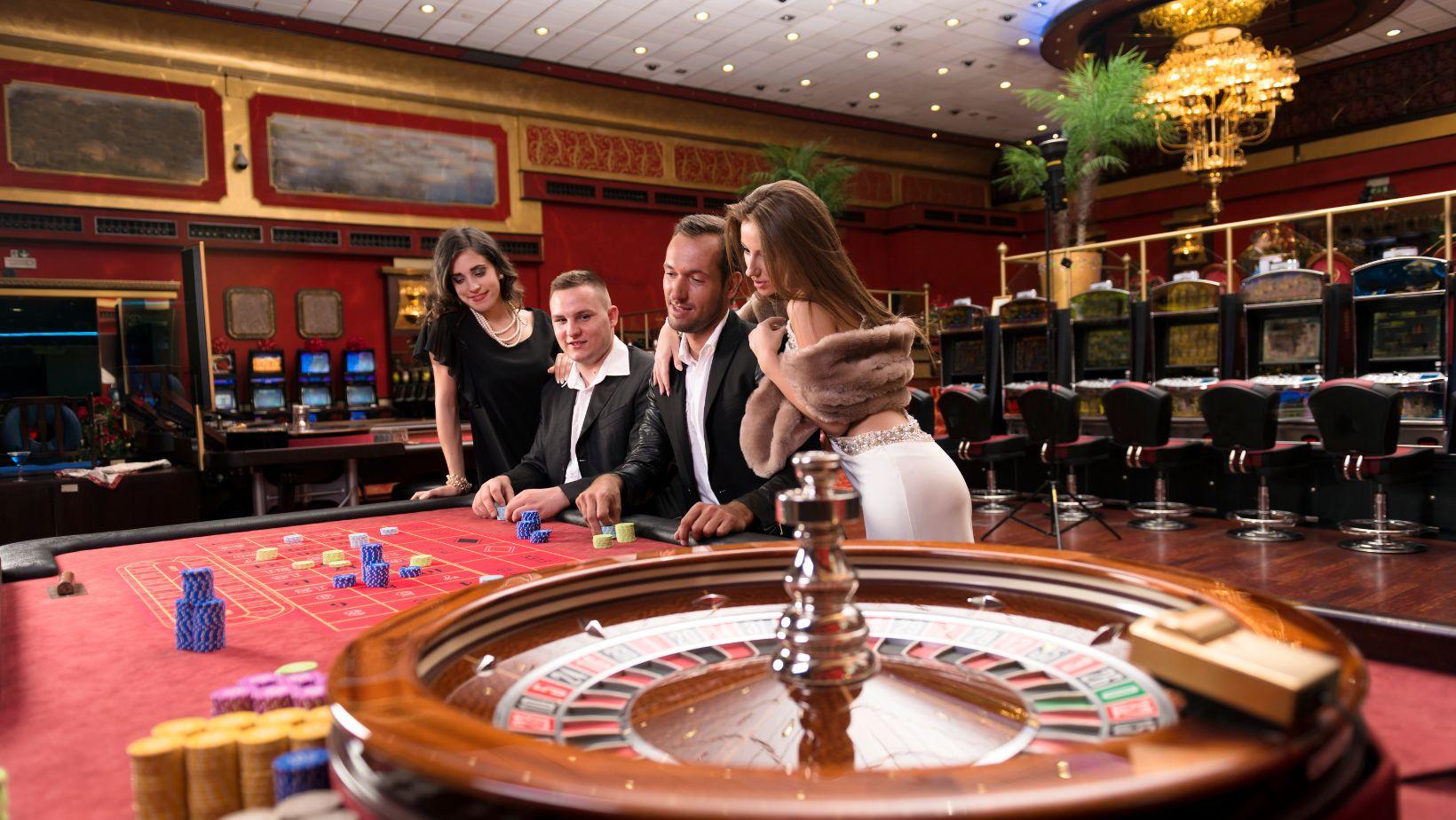
The basic gameplay loop in Roulette has held people’s attention for centuries. The potential to earn money through uncertainty, suspense and a result that is easy to understand but impossible to know in advance is what gave roulette its popularity.
The modern version of roulette developed in France during the 18th century. Over time, the game spread through European casinos and later across the Atlantic. The single-zero version became closely linked with European casinos, while the American version developed with both 0 and 00. These small design differences also changed the mathematical risk faced by players.
Roulette is available in both traditional casinos and digital formats. It is possible to play roulette online with easy access from a connected device. The online format is generally faster and more convenient, but the central psychological part of it remains the same regardless of where the game is played, as humans are naturally drawn to uncertain outcomes which could produce a meaningful reward.
Why Uncertainty Feels So Good
Uncertainty is one of the reasons why people find roulette interesting. There would not be much point in playing if the end result was always foreseeable. The rotating wheel gives players some time to consider all sorts of possible scenarios, and this short delay adds more satisfaction to the final outcome.
Unpredictable rewards motivate people to continue playing because they never know when the win will occur. This is the reason why the majority of gambling games use a random-ratio reinforcement schedule in which a reward occurs after an unpredictable number of plays
The Brain Looks for Patterns
Humans, generally, have an urge to find patterns. Humans will observe patterns of colors, numbers, streaks, and sequences even if such patterns appear due to random chance. In roulette, this is an important phenomenon since the results of previous spins can be observed on the table. After a number of successive spins of red, one player might think that black is “due.” After successive spins of one number, another player might regard it as “hot.”
The problem is that previous spins do not alter the probability of the next independent spin. Betting at casinos can encourage both the gambler’s fallacy and a tendency to see patterns in recent results, even though each spin of the wheel is independent. The illusion of control can also lead people to overestimate their personal influence over events determined by chance.
The Illusion of Control
Roulette is a game of both choice and chance as the player has options such as selecting a number, picking red or black, changing the type of wager, choosing the right time to place a bet and setting their own limits. The choices themselves are real but do not give the gambler any power over where the ball ends up on the wheel.
This creates an interesting psychological balance because players can make decisions and feel involved in the process, even though the final outcome is determined by chance. Having control over the betting process makes the experience more personal which leads some players to think that their decisions are having a stronger effect on the result than they actually are.
Winning Feels Different From Expected Value
Roulette shows the difference between what a decision feels like it means and what the maths actually tells us. For example, winning may make a player feel that their strategy worked. After losing, a player might think they are now more likely to win, even though the odds have not changed. But this is only how the player interprets the odds, not how the game actually works.
There are 37 possible results because there are 36 numbers and one zero in European roulette. In the American version, there are 38 possible results because of a double zero along with the single zero. For all common types of bets, this increases the mathematical advantage for the casino. There is a house edge of 2.70% in European roulette and 5.26% in American roulette. It is important to realize that these are only long-run mathematical expectations.
This is where understanding financial risk can help. Uncertainty, expected returns, and risk should be considered separately rather than judged by a single short-term result. The same basic habit of thinking applies here: one outcome is information about one outcome, not proof of a reliable system.
Why Roulette Attracts Attention
The game of roulette works because gamblers are not only after money but some thrill as well. There is a repetitive pattern of events: before a spin there is excitement, while spinning there is anticipation, and once the ball stops rolling, the result is immediately understood. The simplicity of the game itself is an added bonus.
Technology has also changed the way roulette is played for the better, but the basic gameplay loop remains the same. With faster access to the game comes the need for fast decision-making, therefore making self-awareness crucial. It’s important for the player to be able to be self-critical and spot the warning signs of addiction such as betting beyond their means, increasing the stake just to have that rush and gambling to recover their losses.
|
|
Main Idea |
Roulette Example |
|
Psychology of Risk |
Uncertainty and possible rewards attract players. |
The outcome is simple to understand but impossible to predict. |
|
Uncertainty |
Unpredictable rewards can encourage continued play. |
The wheel’s spin creates anticipation before the result. |
|
Pattern Seeking |
People may see patterns in random results. |
A player may believe black is “due” after repeated red results. |
|
Illusion of Control |
Players have choices but cannot control the final outcome. |
Choosing a number or bet type does not influence where the ball lands. |
|
Mathematical Risk |
Short-term wins do not change the underlying probabilities. |
The house edge is 2.70% in European roulette and 5.26% in American roulette. |
|
Awareness |
Exciting gameplay will increase the need for being more self-aware. |
Warning signs include chasing losses, increasing stakes and betting beyond means. |


The Psychology of Risk: Why Roulette Has Fascinated Players for Centuries

The 4 Casinos Leading the Way in Making High RTP Part of the Appeal

How to Build a More Social, Joyful Weekly Routine

How to Plan Leisure Spending with Clear Limits

Reading Slot Payouts Before You Press Spin

I Turned One Boring Product Video Into Five Different Styles Without Reshooting Anything

Optima Tax Relief Explains How Bonus Depreciation Works for Real Estate

Standard Chartered predicts Bitcoin will reach $100,000: A guide to cryptocurrency mining that can earn $40,000

Why Skill-Based Prize Competitions Are Becoming a Popular Weekend Hobby
