
Lower Body and Glute Workouts with Bands Anywhere

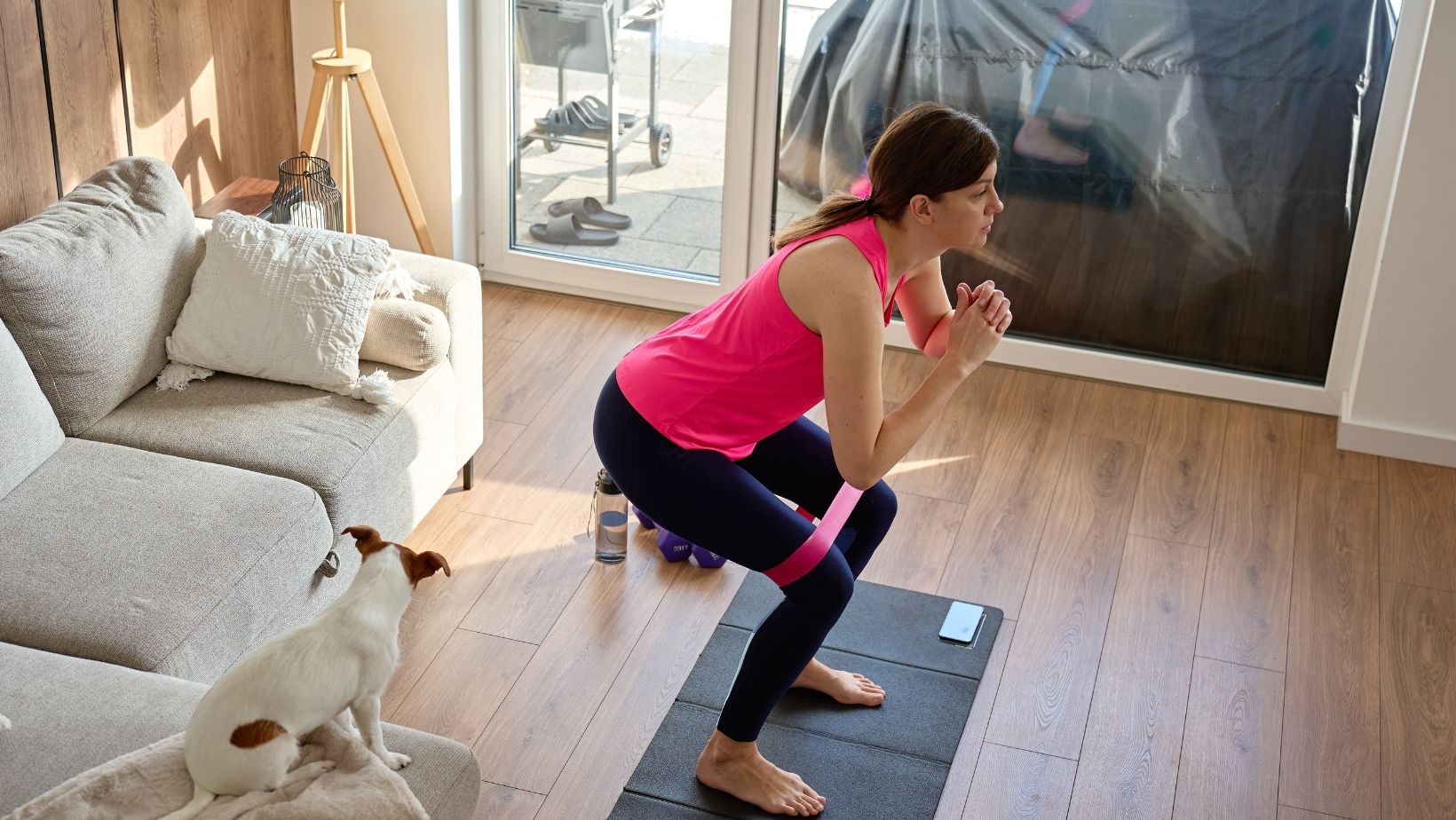
Lifting heavy weights is not the only way to get stronger. Resistance band exercises for legs deliver powerful results without requiring a gym membership or bulky equipment. These versatile tools add tension throughout the full range of motion, activating deep glute muscles more efficiently than bodyweight movements alone. Moreover, they’re lightweight and portable, making them perfect for travel or home workouts. Whether you’re looking for effective leg exercises with bands or a complete leg workout with bands, this guide has you covered.
Why Resistance Bands Work for Lower Body Training
Resistance bands create tension by stretching, which works your muscles throughout the entire range of motion. Unlike free weights that rely on gravity, bands provide constant tension during both the lifting and lowering phases of each exercise. Strength exercise bands, part of a complete resistance bands set and elastic stretch bands collection, are perfect resistance bands for home gym, home and outdoor full-body workouts, and therapy. These exercise and fitness accessories make resistance bands for training accessible, versatile, and effective for every major muscle group. This means your leg muscles stay engaged from start to finish, stimulating growth and building strength more consistently.
The resistance increases progressively as you stretch the band. During squats or glute bridges, bands provide the most resistance at peak contraction and less when muscles are weaker, matching your natural strength curve and making leg exercises highly efficient. Research shows elastic resistance training produces similar lower limb strength gains as conventional weight training. Bands also target smaller stabilizing muscles that weights often miss, engaging your core and hip stabilizers to improve form, alignment, and functional strength while reducing injury risk.
Bands are joint-friendly and adaptable. You can adjust resistance by shortening or lengthening the band, allowing gradual progression without switching between weights that feel too light or too heavy. They enhance the mind-muscle connection, helping you activate glutes and legs correctly during every repetition.
For injury recovery and prevention, bands’ low-impact design supports safe movement through a wide range of motion. Physical therapists frequently use them for rehabilitation because they provide controlled resistance while protecting joints. A quality resistance bands set costs around $25, far less than gym equipment, offering versatility, convenience, and effectiveness for a complete leg workout at home or outdoors.
Choosing the Right Band for Leg Exercises with Bands
Your band selection determines how effectively you’ll target your legs and glutes. Loop bands, sometimes called mini or booty bands, work best because their small circumference fits snugly around thighs, knees, or ankles, staying in position during squats and lateral walks to maintain constant tension. Fabric bands outperform latex for lower body training. Thick and sturdy, they provide higher resistance (20–55 lb), won’t roll up, and distribute pressure evenly, letting you focus on the exercise rather than adjusting the band.

Hip bands deserve special mention for glute-focused training. These specialized bands activate your glute muscles while improving your form during compound movements. They keep your knees pushed out during squats and deadlifts, reducing injury risk by maintaining proper alignment. Physical therapists often recommend hip bands for prehab exercises because they target smaller hip and glute muscles that larger movements miss.
Resistance level matters significantly for leg training. Your legs contain some of your body’s largest muscle groups, requiring heavier resistance to feel challenged. Beginners should start with lighter bands and progress gradually as strength builds. However, you can combine multiple bands together to increase total resistance. For example, pairing a 13 kg band with a 22 kg band creates 35 kg of resistance.
Choose bands made from durable, high-quality materials like latex or fabric that maintain consistent resistance over time. Physical therapists note that tearing and cracking signal damage requiring replacement, but you’ll notice decreased resistance before visible damage appears. Longer bands allow greater range of motion during resistance band leg workout movements, giving you more exercise variations. Studies show that elastic resistance training can improve strength, flexibility, and balance while remaining safe, low-cost, and easy to use in home or outdoor workouts.
The key is selecting a band that challenges you without compromising your form. If maintaining proper technique becomes difficult, switch to a lighter band. Your muscles need appropriate resistance to grow stronger, but sacrificing form leads to poor results and potential injury.
Best Lower Body Resistance Band Exercises
Banded squats
Place a loop band just above your knees and position your feet hip-width apart. Push your hips back while bending your knees until your thighs reach parallel with the floor. The band encourages you to push your knees outward, activating your glutes more intensely than regular squats. This outward pressure targets your gluteus medius along with your quadriceps and hip adductors. Perform 8-12 reps, focusing on controlled movement through both the lowering and rising phases.
Monster walks
Loop a band above your knees and lower into a quarter squat position. Step laterally to the right, maintaining tension throughout the movement. This exercise targets all three glute muscles (maximus, medius, minimus) while engaging your hip abductors and adductors. Take 10-12 steps in each direction. Monster walks improve hip stability and reduce knee injury risk by strengthening the muscles around your knee joint.
Glute bridges with band
Lie on your back with a band positioned above your knees and your feet flat on the floor. Bridge your hips upward while pushing your knees outward against the band. The band provides accommodating resistance, placing maximum tension on your glutes at peak contraction. This movement works your glutes, hamstrings, and core muscles effectively.
Banded kickbacks
Stand with a band around your ankles. Keeping your back straight and core engaged, lift one leg directly behind you while squeezing your glutes. This joint-friendly exercise builds glute strength and improves balance. Complete 15 reps on each side.
Clamshells
Position a band above your knees and lie on your side with knees bent at 90 degrees. Lift your top knee toward the ceiling while keeping your feet together. Clamshells specifically target your gluteus medius, the muscle responsible for hip stabilization. Perform 15 reps per side.
Standing leg curls
Secure one end of the band under your foot and loop the other end around your opposite ankle. Bend the banded leg, curling your heel toward your glutes. Standing leg curls target your hamstrings and quadriceps while stabilizing your knees and potentially relieving back pain.
Complete Leg Workout with Bands You Can Do Anywhere
Warm-up routine
To begin with, spend 5 minutes activating your lower body before starting resistance band exercises for legs. Place a mini band above your knees and perform 10 squats, pushing outward against the band. Follow with 10 alternating hamstring curls with the band around your calves. Complete 10 backward toe taps, stepping one foot behind you as far as possible. Finish with 10 monster walks, maintaining a quarter squat position while stepping forward. These dynamic movements prime your muscles for the work ahead.
Main circuit structure
Your resistance band leg workout follows a circuit format lasting 10-20 minutes. Perform each exercise for 30 seconds, rest 10 seconds, then move to the next movement. Complete the full circuit 3 times with 60 seconds of rest between rounds. This structure keeps your heart rate elevated while building strength. Choose exercises that target different muscle groups in sequence, allowing one area to recover while another works.
Cool-down stretches
Dedicate 5 minutes to static stretching after your leg workout with bands. Hold each stretch for 10-30 seconds without bouncing. Target your hamstrings, glutes, hip flexors, and quadriceps. Include butterfly stretches for inner thighs, figure 4 poses for glutes, and standing quad stretches. These stretches deliver oxygen to your muscles, promoting faster recovery while reducing post-workout stiffness.
Conclusion
Resistance bands deliver powerful leg and glute training without the need for expensive equipment or gym access. You now have the knowledge to select the right bands, perform effective exercises, and build a complete lower body routine. As a result, you can strengthen your legs anywhere, whether at home, traveling, or outdoors. Start with lighter resistance and progress gradually as your strength improves. Consistency matters more than intensity, so stick with your routine and watch your results improve.


Why Internal Linking Matters for Website SEO

Leading AI Video Generators for Creators in 2026

Optima Tax Relief Explains What an IRS Audit Lawyer Does and How They Protect You

The Physiology of Good Decisions: How Damian Creamer Manages Energy, Not Just Time

Easy Ways to Organize and Work With Digital Documents

Practical Ways to Turn Motivation into Consistent Habits

Why the Headline Price Rarely Tells You the True Cost of a Major Financial Decision

Where to Find Personal Finance Content on BetterThisWorld.com

How Entrepreneurs Can Evaluate Online Business Advice
