
How Do Clamp Meters Measure Current Quickly and Accurately

Introduction
In all electrical systems precision measurements are essential in any electrical system. When you’re an electrician who is troubleshooting a circuit or maintaining industrial equipment, or observing residential installations, Clamp meters are vital instruments. They let you accurately and safely measure current without disconnecting wires, delivering both accuracy and speed within a compact device.
They might appear like tiny hand-held tools. Clamp meters are needed to maintain a good and safe electrical system. We will have a closer look at the way they work and why they are necessary, and how a great difference can be achieved by selecting the most suitable one.
What Exactly Is a Clamp Meter?
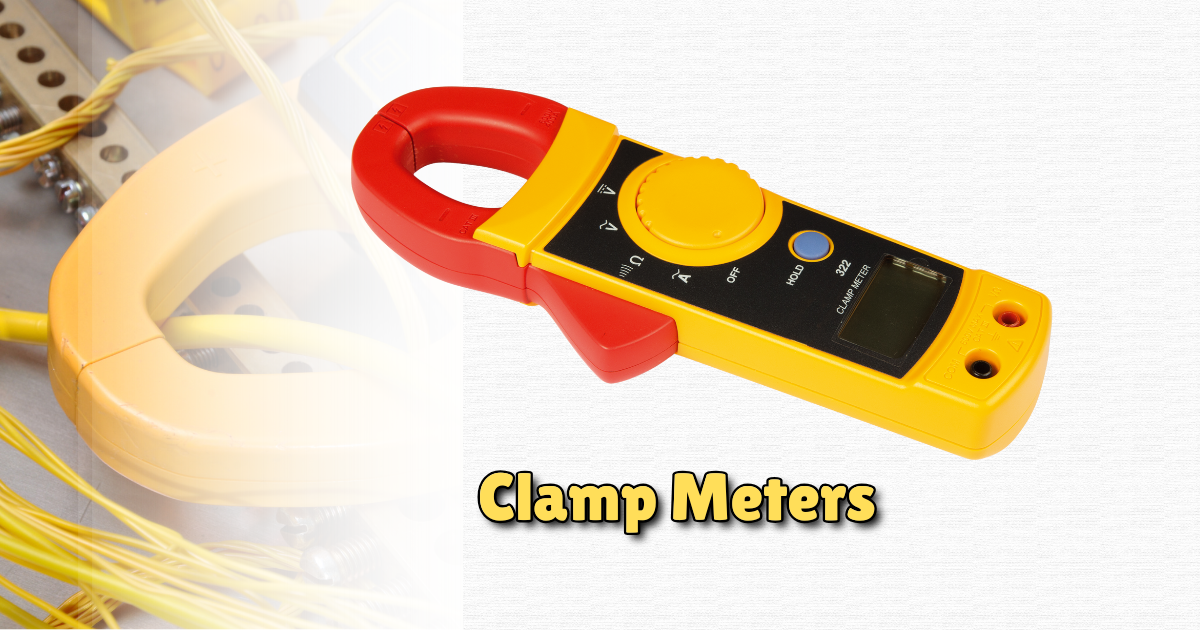
A clamp meter is an electric test instrument used to determine the flow of current through conductors. Certain models can take measurements of AC while others manage DC, and the more advanced versions offer True RMS readings for complicated signals.
Modern clamp meters can also provide digital displays, data logging, as well as non-contact testing of current, which allows immediate readings that do not require contact. With integration capabilities to industrial systems, clamp meters are able to transmit data to automate monitoring, making sure that the operation is safe and efficient.
Simply put, they assist in keeping accurate electrical readings and prevent overloads of equipment, as well as keep employees and equipment safe.
Key Features of Clamp Meters
In case you want to choose the right clamp meter, it might be a great difference, which depends on knowing its basic features, which will guarantee your security, accuracy, and efficiency.
The current clamp meters are equipped with various features designed to suit the needs of both amateur and professional users.
- Digital Clamp Meter also provides easy-to-read readings and has a backlight in places where there is low lighting.
- AC/DC Current Measurement manages direct and alternating currents effortlessly.
- True RMS Function: Provides precise readings, even when there is the presence of nonlinear electric loads.
- Testing for Non-Contact Current: Provides additional security by detecting live wires that do not have physical contact.
- Hold and Data Logging Note measurements to document and analyze.
Applications of Clamp Meters
Clamp meters are common but powerful electrical instruments that enable measurement of current without removing wires; thus, they are safe, quick, and useful in the application of several applications. They are usually employed in residential, commercial, and industrial settings.
Housing and Commercial Electricity.
Clamp meters are used to measure current flowing in a wiring system, circuit breakers, and distribution panels in residential as well as commercial electrical systems. They can be applied to locate any overloads, to detect faulty circuits, as well as to ensure that electrical installations are functioning safely and efficiently.
Industrial Applications
The clamp meters are very fundamental in industrial settings to measure high-current devices like motors, transformers, and generators. They assist the technician in monitoring the performance of the systems, the abnormality of currents, and avoiding damage to equipment or downtime.
Live Circuit Troubleshooting and Maintenance
Clamp meters are commonly applied to maintenance and troubleshooting of live circuits. As measurements may be conducted without necessarily coming into physical contact with conductors, they can be used to conduct a rapid check and minimize the possibility of electric shock, and are therefore suitable in routine maintenance operations.
Energy Scans and Efficacy Tests
Clamp meters can also be used to carry out energy monitoring, where the current consumption is measured and power losses detected. This assists in increasing the efficiency of the system as well as minimizing the costs of operations.
Assuring System Reliability and Electrical Safety
In general, clamp meters have been important in electrical safety, system diagnosis, and performance issues in a broad spectrum of applications.
How Clamp Meters Improve Efficiency and Safety
If you are working on your house circuit or overseeing industrial equipment, clamp meters play a crucial role in boosting effectiveness as well as the safety and quality of the equipment. Here’s how:
1. Accurate Current Measurement
Clamp meters give exact readings, preventing overloads and protecting your equipment from possible injury.
2. Time-Saving Diagnostics
They can test the current without pulling wires, hence making troubleshooting faster, easier, and safer.
3. Automated Data Integration
Advanced clamp meters are able to be connected to monitoring systems and provide real-time information for better control and analysis that is automated.
4. Reduced Risk of Electric Shock
Non-contact meters allow you to test live circuits in the absence of direct contact, which greatly increases the security for your devices.
5. Extended Equipment Lifespan
In order to ensure proper flow of current clamp meters can help decrease the stress on electrical parts, thus reducing wear and extending the life of equipment.

How to Use a Clamp Meter Correctly
It is easy to use a clamp meter, but an appropriate approach is essential in order to get the right measurements that are certain, safe, and correct. First, choose the kind of clamp, be it an AC or DC type, depending on the type of current under measurement. For example, if you want to measure AC current from 0-400A, you can choose a digital clamp meter AC 400A. Then close the clamp and rotate it in a controlled manner along one of the conductors to make sure it is accurate.
This reading is going to be displayed on the display screen, and you can utilize this function for data holding to keep track of or write down the measurements to be used later for analysis. This process will not only guarantee precise readings but also help keep your safety in mind when working in live circuits.
Benefits of Using Clamp Meters
A clamp meter can provide more than measurements.
- Efficiency: Gives fast and precise readings, which reduces time spent on troubleshooting.
- Safety: Non-contact measurements reduce the possibility of electric shock and safeguard the person using the device and also the equipment.
- Conserve money: The right measurements will help eliminate the demolition of equipment and will decrease the energy consumption.
- Flexibility: The fact that it is possible to utilize a variety of electrical systems. This includes industrial machines and household wiring.
Installation Tips for Maximum Accuracy
To measure real and accurate values, a well-calibrated clamp meter is important. The following are some of the important aspects to be considered:
- Separate the Conductor: By doing so, ensure that the conductor you are looking at is a single wire and not several wires. This is because once the wires are clamped around the wrong reading will be obtained.
- Do not use multiple wires: Do not connect parallel or bundled conductors because it could alter the measurement and decrease the precision.
- Limit heat and vibrations: the sensor must be placed in such a way that it is not exposed to heat and vibrations that can lead to instability of the sensor and sensor operation.
- Select a suitable range and Calibration: Select the correct clamp meter with an appropriate current range and a proper system for the type of system you are trying to test.
Final Thoughts
Clamp meters may seem simple; however, they have a significant role in attaining safety, effectiveness, and proper measurements of electricity. They are useful to troubleshoot problems at home or to monitor industrial operations. They help in the effective functioning of the equipment, ensure that the equipment is not destroyed, in addition, they shield the users against the risks of electricity. By investing in a good quality clamp meter, one is more efficient, finds it easier to diagnostics and provides accurate, up-to-date measurements.
Make the most of your toolkit now and enjoy the accuracy, security, convenience, and safety that a quality clamp meter provides.
FAQs
What was a clamp meter applicable to?
A clamp meter is a non-hazardous voltage, AC/DC, and resistance measurement tool, which will not require contact with the cables; therefore, it is a tool that DIYers and electricians cannot do without.
How do non-contact clampmeters function?
Non-contact meters are able to discern the electromagnetic field around the conductor. This allows the measuring of current without touching live wires. This improves security.
What’s the truth about RMS? So what is it and so big about it?
True RMS gives real values of the most complicated or non-linear electronic loads, e.g., a motor or variable frequency drive, required in an industrial system.


The 4 Casinos Leading the Way in Making High RTP Part of the Appeal

How to Build a More Social, Joyful Weekly Routine

How to Plan Leisure Spending with Clear Limits

Reading Slot Payouts Before You Press Spin

How Adult Website Owners Can Build Sustainable Revenue in a Competitive Market

I Turned One Boring Product Video Into Five Different Styles Without Reshooting Anything

Optima Tax Relief Explains How Bonus Depreciation Works for Real Estate

Standard Chartered predicts Bitcoin will reach $100,000: A guide to cryptocurrency mining that can earn $40,000

Why Skill-Based Prize Competitions Are Becoming a Popular Weekend Hobby
