
What Is Bankroll Management for Real-Money Online Gaming?

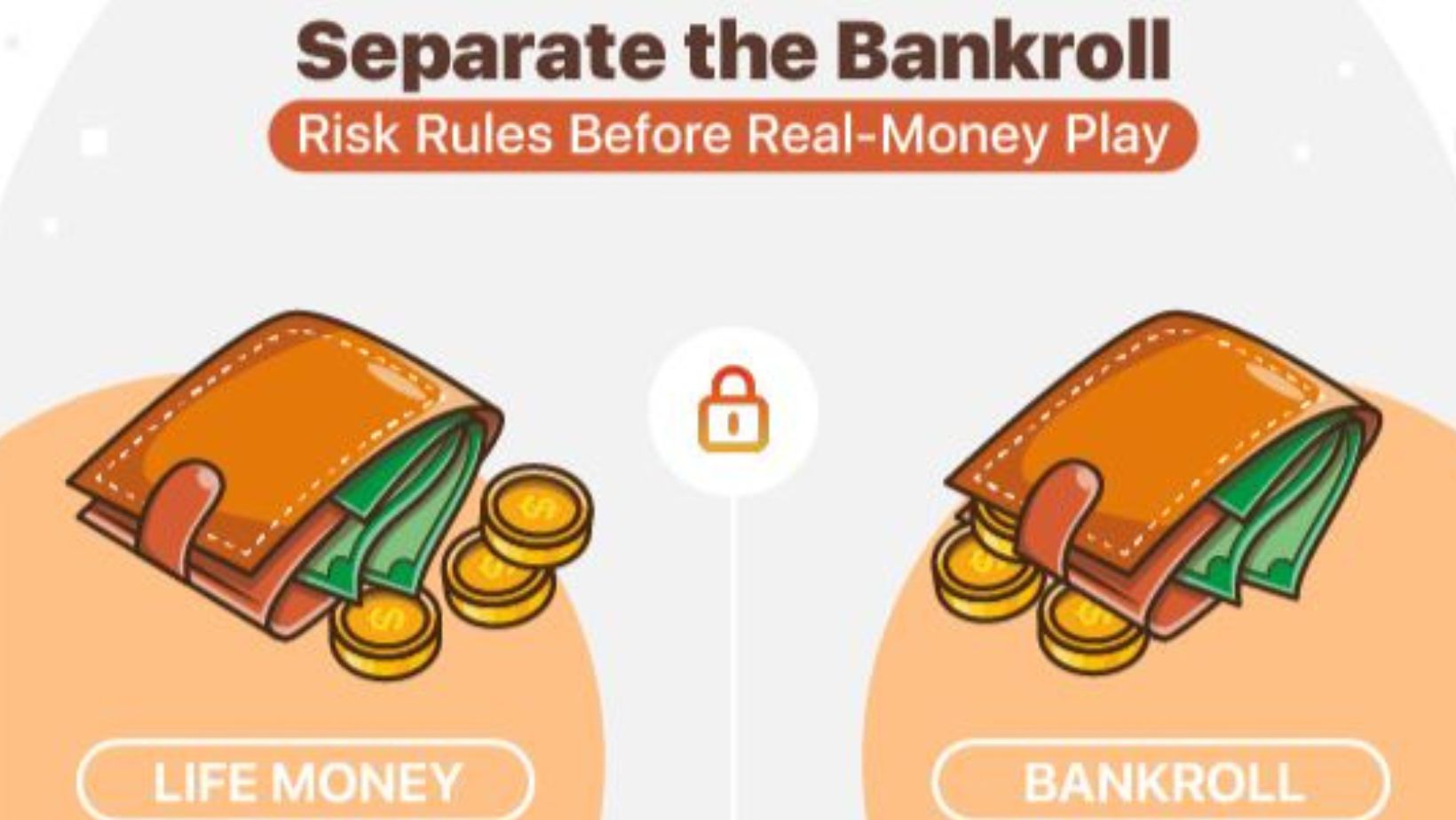
What is bankroll management? It is a risk-management system for real-money play in online casinos and sport betting sites. If you talk about casino bankroll management, it’s not a strategy to win.
Players should be aware that short-term swings happen even with good decisions. Therefore, a good bankroll management is even more important. Especially for newer players responsible bankroll strategies help to avoid a financial risk and loss.
In our article, we explain some practical tools like unit sizing, stop-loss tracking and session rules. Additionally, we have some advice on how to play responsibly.
Why Bankroll Management Matters
To understand why bankroll management matters, it is important to understand that each player has a different risk profile. Based on this fact, it is difficult to provide a single bankroll advice that fits for everyone.
Important criteria are variance and tilt. Variance describes the short-term fluctuations like luck swings and down swings. It refers to a statistical measurement. But even if a player uses mathematically correct numbers, there is still a risk to lose money. Especially unmanaged sessions lead to chasing losses and oversized bets. Therefore, structure should always beat willpower. Bankroll management is not a tool to stop loss gambling.
With a good and personalized bankroll management, playing on sites as CasinoAllianz is even more fun.
Main aspects of a good bankroll management:
● Protection of money, emotions and decision quality
● They don’t promise and guarantee profit
● They matter most in high-variance games
Key Numbers
To understand how a good casino bank management works, you have to understand some key numbers. No matter if you prefer slots, blackjack or poker – everything is built on math and numbers.
We explain 3 of the most important key numbers in online casinos:
· House Edge: The house edge is the casino’s advantage over players. It is directly linked to the RTP. If the RTP is 96%, the house edge is 4%. Different game types have different house edges (see table below).
· RTP: The Return to Player number gives an idea of a potential return.
· Variance: The volatility (or variance) shows the risk level of a game. A high volatility offers large, but less frequent wins. A low volatility provides small but more frequent payouts.
| Metric (typical) | Why it matters for bankroll rules |
| Blackjack house edge ~0.5%–1% | Small edge still compounds over many hands |
| Slot RTP often ~96% (varies) | RTP is long-run; short-run variance can be huge |
| Poker buy-in buffers (20–30+ often cited) | Downswings happen; buffer reduces risk of busting |
Define Your Bankroll – and separate it from Life Money
One of the most important things is to define the bankroll clearly. Never use money you need for everyday life as for paying your rent, insurance and groceries. Separate the money from bills and savings.
As a practical advice, use a separate account or separate wallet for money allocated for entertainment. If you lose the money, it shouldn’t be a big deal and jeopardize monthly finances.

There are 3 bankroll types. The total bankroll is the full amount that is saved for playing. If this money is gone, stop playing. Never add funds mid-month. The session bankroll defines the amount for the current session and the daily or weekly cap for the day or week.
Also, do not only set money but also time boundaries for responsible gambling.
| Bankroll Type | What it is | Example rule |
| Total bankroll | Full amount reserved for play | “Never add funds mid-month” |
| Session bankroll | Amount for one session | “Stop after X units” |
| Daily/weekly cap | Spending boundary | “No more than Y per day” |
Choosing Your Unit Size
A unit size system is a bankroll management system where the “unit” represents a standard for betting. To determine the unit size, the bankroll must be considered. If you have a $100 bankroll, one unit can be $1 up to $5. The unit is a fixed fraction of the bankroll and should be 0.5%–2%.
Typical ranges depend on the risk tolerance. A low unit size means a lower volatility and a longer runway. A high unit size of 3%+ means a high risk of rapid drawdowns. Many players use an average unit size between 1%–2%. Every player should choose the unit size carefully, there is no “guaranteed optimal.”
A unit betting system prevents emotional bet sizing and should be consistency. Once the unit size is set, there should be no jumping after wins or losses.
| Unit size rule | Practical impact |
| 0.5%–1% per unit | Lower volatility, longer runway |
| 1%–2% per unit | Balanced approach for many players |
| 3%+ per unit | High risk of rapid drawdowns |
Flat Betting vs Percentage Staking: When Each Makes Sense
The two most common systems for betting are flat betting and percentage staking. Flat betting means wagering the same amount on each bet while percentage staking means the unit adjusts as bankroll changes.
The flat betting strategy is suitable for players who value stability. One big advantage of this system is the simplicity. Players don’t have to think if a bet should be higher or not or if a current losing streak necessitates adjusting the stake.
Percentage staking, also known as proportional staking, means betting a percentage of the bankroll. If the bankroll shrinks, a percentage staking plan can reduce the risk after drawdowns. On the other hand, it also grows more slowly.
The choice depends on the betting frequency, psychological tendencies and the bankroll size. A hybrid approach can capture the benefits of both systems, but require a more active bank management.
| Approach | Best for | Main drawback |
| Flat betting strategy | Simplicity + discipline | Doesn’t auto-adjust to bankroll changes |
| Percentage staking plan | Dynamic risk control | Requires tracking and recalculation |
Game-Specific Bankroll Notes
The volatility differs depending on what kind of game you are playing. The bankroll rules should always reflect the volatility of the game. We have a look at the 3 most common casino games:
Blackjack
The standard house edge for blackjack is between 0.5%–2% per unit. Compared to other games as slots or roulette, the house edge is rather low. The smaller unit sizes help reduce swings and the volatility is, based on y disciplined play, lower. A common bankroll for blackjack rule is to bet 1% – 2% of the total bankroll per hand.
Slots
Slots have a high variance volatility depending on the slot type. Slots are typically divided in 3 categories: High, medium and low volatility. The bankroll for slots should be based on tighter session caps and smaller units.
Poker
Poker volatility depends on the skill and variance. The game has a very high variance. A cite typical poker buy-in guidance is to keep 20–30+ buy-ins for cash games. A good bankroll for poker management should lower the stakes immediately as soon as the bankroll drops.
| Game | Typical volatility | Bankroll note |
| Blackjack | Lower (with disciplined play) | Smaller unit sizes help reduce swings |
| Slots | High variance | Use tighter session caps + smaller units |
| Poker | Skill + variance | Keep a larger buffer for downswings |
Limits That Actually Work
For a bank management system to be successful, it need limits that actually work. There should be two types of limits: the daily loss limit and a stop-loss limit.
The daily loss limit is the limit for the maximum amount you’re willing to lose in a day or session. A popular daily loss limit is 1.5% to 3%. The daily stop limit can be a number of consecutive losses. Stop-loss rules are a “pre-commitment” to prevent chasing losses. The rules should be based on volatility and skills. Additionally, to the daily loss limit and stop loss rules there can be a win limit as well. This limit avoids giving a win back.
We prepared a checklist for set up limits that work:
● Set your daily loss limit in units (not money only)
● Decide the stop point before you start
● Take breaks after emotional spikes
● Never increase unit size to “recover”
Quick Bankroll Plan
Creating a bankroll management plan is not complicated but requires structure and discipline. Many players track their wins, but not the losses. Keep in mind that a bankroll is most valuable during a losing strike. A proper tracking of wins and losses is essential for a good casino bankroll strategy.
We created a ready-to-use template that you can copy. The table shows an example how it can look like.
| Bankroll Plan |
| Period: c Daily c Weekly c Monthly Total bankroll amount: ______________________________________________Unit size: ________________________________________________________Session cap: _____________________________________________________Daily loss limit: ____________________________________________________Stop-loss trigger: ___________________________________________________Tracking: __________________________________________________________ |
Example:
| Item | Your rule (example) |
| Total bankroll | $200 for the month |
| Unit size | 1% ($2 per unit) |
| Session cap | 25 units max |
| Daily loss limit | 10 units |
| Stop-loss trigger | End session after 10 units down |
| Tracking | Log each session in notes |
Tracking and Reviewing: How to Know Your Rules Work
Tracking all your activities. Without a proper tracking you won’t be able to manage the bankroll. There are templates, spreadsheets, apps and online calculators to help log all the wins and losses.
Many players only track their winnings and stop writing down the losses. Especially when you are losing, tracking is helpful. Writing down the negative numbers is a powerful way to brake the loss strake.
Log the game you are playing, the session time, in and out units and emotion notes. Keep the tracking simple. That helps reviewing your activities. By reviewing you can detect leaks as oversized units, chasing and long sessions.
| What to track | Why it matters |
| Units wagered | Shows exposure, not just outcomes |
| Session length | Fatigue increases mistakes |
| Emotion notes | Detects tilt patterns |
| Rule breaks | Identifies the real problem |
Common Mistakes and How to Fix Them
There are some typical bankroll mistakes. We listed the most common ones and show how to avoid them.
● Mixing life money with bankroll.
è Instead of using your life money only use money from a separate bank account or wallet that is allocated for gambling.
● Increasing stakes to chase losses. This is one of the fastest ways of losing all the money. The “get it back theory” often leads to bigger losses.
è Instead of chasing losses set up a stop-loss trigger.
● No session cap.
è Instead of having a bankroll management that only considers the full amount set up a daily or a weekly cap.
● Ignoring high volatility games because the less frequent wins.
è Instead of ignoring high volatility games set up a good bankroll management and consider both, high and low volatility games.
● Not tracking results. Tracking all the results can be take a lot of time, but it is highly recommended.
è Instead of not tracking the results write down all the winnings and losses for a better oversight by using a template.
Broader Money Skills Context
The bankroll discipline for gambling can be transferred to basic personal finance habits. In both ways budget planning, caps and review cycles are recommended. While a bankroll management for gambling helps to track wins and losses a good financial management is also important for everyday life.
To understand how financial management is working there should be a common financial knowledge, financial skills like numeracy, financial confidence and positive financial behavior such as paying bills on time and regular savings. A financial management guide helps to understand how a good financial management works.
FAQ:
1. What is bankroll management in real-money online gaming?
Bankroll management is a risk management system for online gambling. It helps to set limits and avoid big losses.
2. What is a unit betting system?
A unit size system is a bankroll management system where the “unit” represents a standard for betting. It controls risks and removes emotions. A typical number for a unit is about 1 – 2% of the total bankroll.
3. Is flat betting strategy safer than percentage staking plan?
Flat betting is considered as the safer option due to the stability. This option means a lower risk and a higher safety.
4. What’s the biggest mistake beginners make?
One of the biggest mistakes beginners make is chasing losses. Also thinking that there has to be a win after a losing streak is a big illusion.
5. Does bankroll management guarantee profit?
No. Even if all calculated numbers are correct, a bankroll management is no guarantee for winnings and profit.
6. How often should I review my tracking notes?
Tracking notes should be reviewed regularly after each gambling session. Reviewing the notes is as important as tracking itself.


Why Internal Linking Matters for Website SEO

Leading AI Video Generators for Creators in 2026

Optima Tax Relief Explains What an IRS Audit Lawyer Does and How They Protect You

The Physiology of Good Decisions: How Damian Creamer Manages Energy, Not Just Time

Easy Ways to Organize and Work With Digital Documents

Practical Ways to Turn Motivation into Consistent Habits

Why the Headline Price Rarely Tells You the True Cost of a Major Financial Decision

Where to Find Personal Finance Content on BetterThisWorld.com

How Entrepreneurs Can Evaluate Online Business Advice
