Luxury Living
A 225-Year-Old Invention Is Suddenly the Hottest Thing in Watches. Here’s Why.

In 1801, Abraham-Louis Breguet patented the tourbillon—a tiny rotating cage inside a watch movement designed to cancel out gravity’s drag on accuracy. It was the most sophisticated portable timekeeping solution of its era. Today, a three-dollar quartz chip keeps better time. A smartphone is more precise by orders of magnitude. And yet tourbillon watches are selling at a pace the industry has not seen in decades.
The paradox is not a bug. It is the entire value proposition.
The Function Died. The Fascination Didn’t.
The tourbillon’s original job—improving accuracy in pocket watches held vertically in a waistcoat—became largely irrelevant the moment watches moved to the wrist. A wristwatch changes position constantly throughout the day, naturally averaging out the gravitational errors the tourbillon was built to correct.
What survived, and what now drives demand, is the visual spectacle. A tourbillon cage completes one full rotation every 60 seconds, exposing dozens of tiny components working in concert. Through a skeleton dial, it looks like a miniature engine running in slow motion on your wrist. Watchmakers have leaned hard into this, designing open dials and sapphire case backs that frame the complication like a gallery exhibit.
For those unfamiliar with the mechanics, Tufina’s guide to how tourbillons actually work offers a clear primer on why fewer than 40 parts, weighing under a gram, can take a master watchmaker weeks to assemble.
The Anti-Smartwatch Effect
The tourbillon’s resurgence is not happening in a vacuum. It tracks almost perfectly with the maturation of the smartwatch market. As the Apple Watch approaches its twelfth generation and Android wearables saturate the mid-market, a countermovement has emerged among consumers who are tired of another device that demands a nightly charge, pushes notifications, and will be obsolete in three years.
A mechanical tourbillon is the polar opposite of all of that. It runs on physics—mainspring tension, gear ratios, and the beat of a balance wheel—and with basic servicing will outlast its owner. There is no firmware to update, no screen to crack, no subscription to renew. In a world saturated with disposable technology, the tourbillon’s permanence is its selling point.
That message resonates with a generation raised on screens who never expected to find novelty in a 19th-century invention.

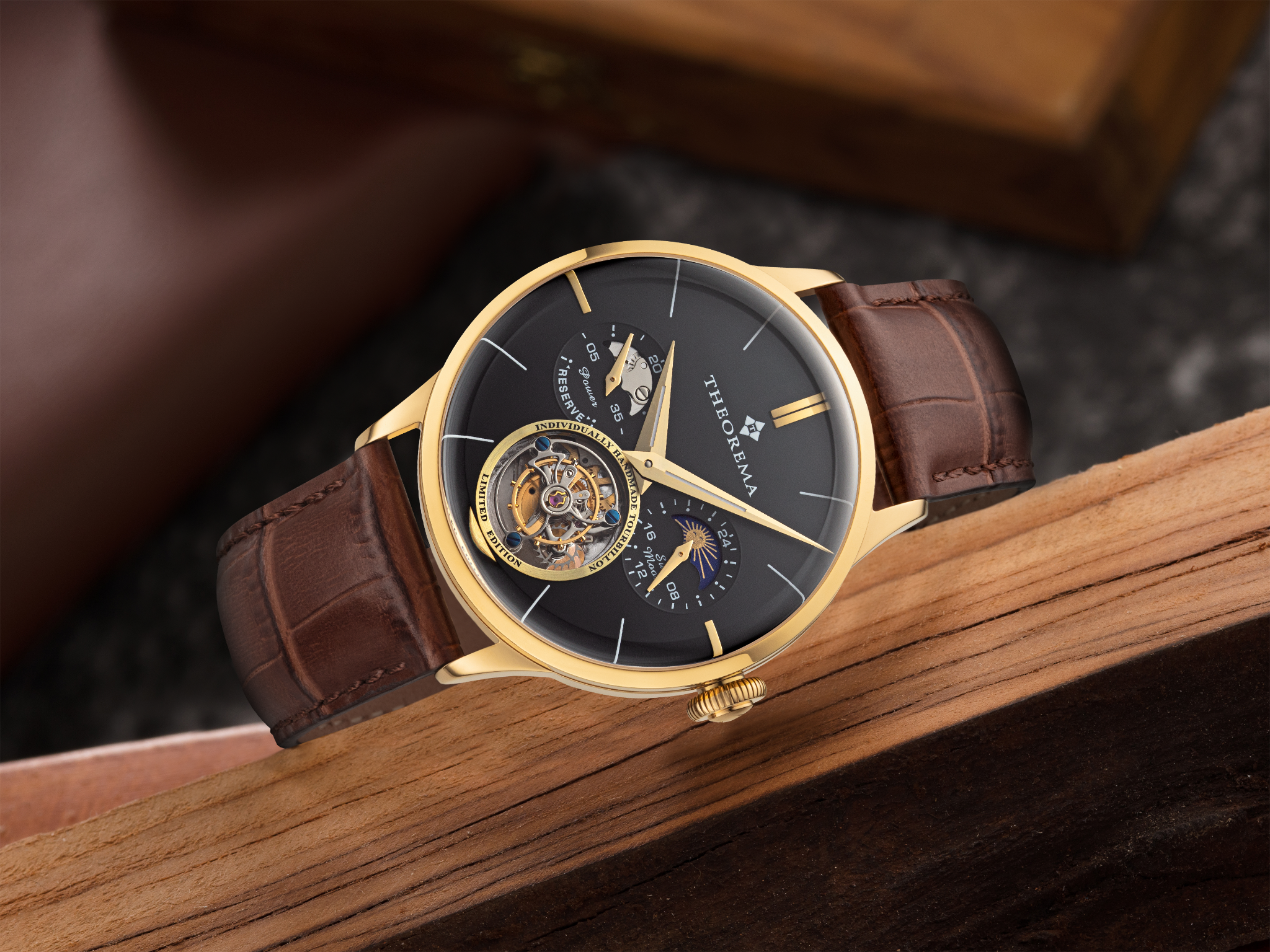
Tufina Theorema Bern Tourbillon GM-906-4 – Co-Axial Automatic Tourbillon for Men.
Price Is No Longer the Barrier It Was
For most of the tourbillon’s history, access required serious wealth. The complication sat exclusively in the catalogs of Swiss houses charging $50,000 to $300,000—positioning it as a collector’s capstone, not an entry point. That exclusivity is loosening.
Tufina, a German brand and family-owned watchmaker dating back to 1828, now offers hand-assembled tourbillons starting below $3,000 through a direct-to-consumer model that cuts out traditional retail markup. The company’s Bern and Zürich collections feature full skeleton dials, sapphire crystals, and individually timed movements. “The tourbillon was never meant to be a gatekeeper,” says Enis Tufina, who heads the company’s eighth generation. “Breguet invented it to solve an engineering problem. We build it to share a craft.”
The result is a new buyer demographic: first-time mechanical watch owners in their late twenties to early forties who appreciate engineering, can recognize craftsmanship, but have no interest in spending five figures to prove it.
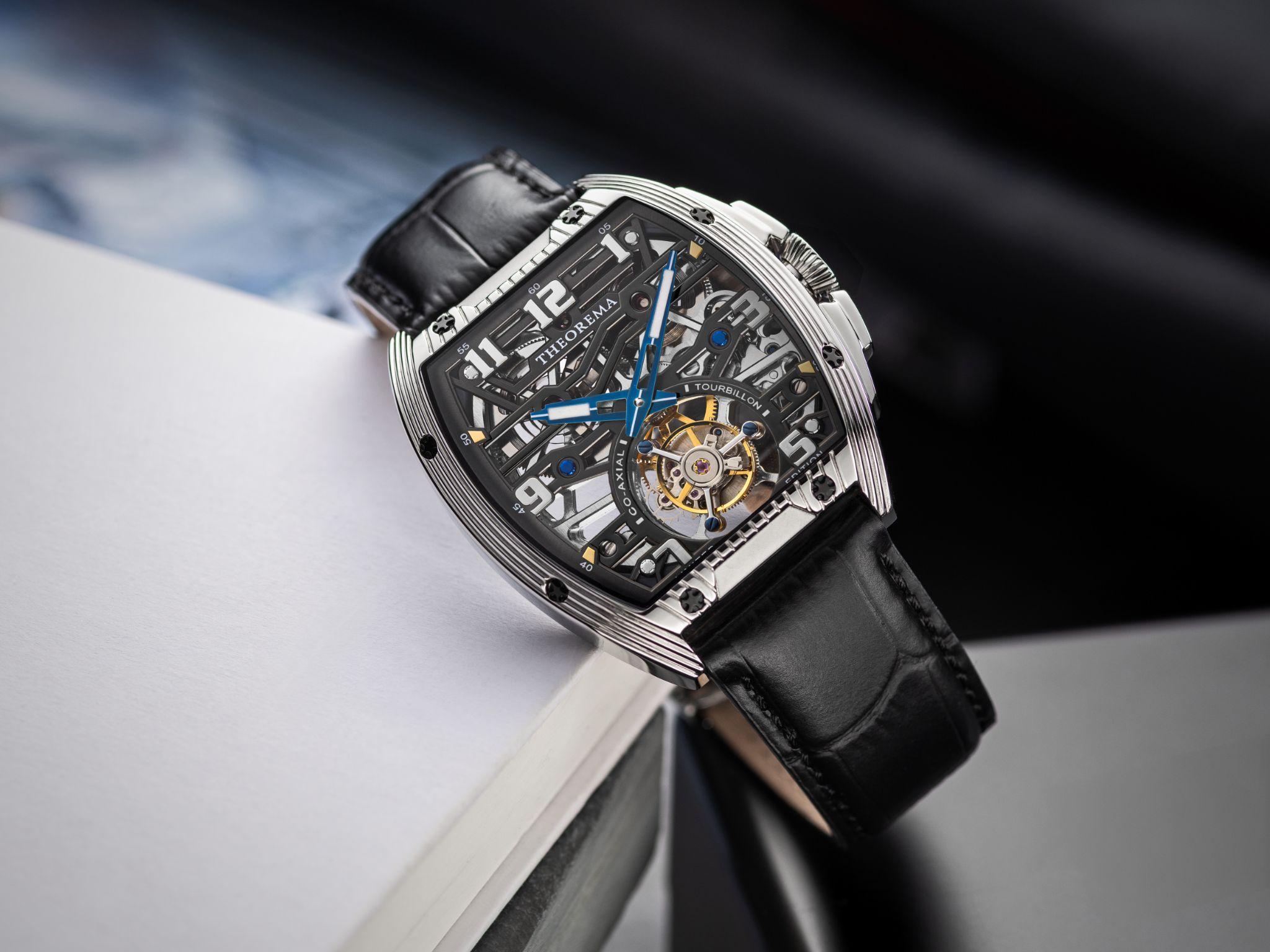
Tufina Theorema St. Moritz Tourbillon GM-907-2 – 72-hour power reserve tourbillon watch.
What Happens When Obsolescence Becomes the Point
The deeper story here is a consumer psychology shift that extends well beyond watches. Vinyl records outsell CDs. Film cameras have a resurgent collector market. Independent bookstores are growing while e-readers plateau. In each case, an “obsolete” format is thriving because consumers are choosing experience over efficiency.
The tourbillon fits this pattern precisely. It does not keep better time than a $10 Casio. It is not more convenient than a phone. What it offers instead is mechanical theater—a tangible, handmade object whose only purpose is to be extraordinary. And as the world grows more digital, more automated, and more disposable, that proposition only gets stronger.
A 225-year-old invention finding its largest audience in the age of artificial intelligence is not a contradiction. It is the most predictable thing in the market.