Latest Trends
Fine, Thick, Curly or Straight? Perfect Hairstyles for Every Hair Type

Choosing a flattering hairstyle starts with understanding what your hair naturally wants to do. Fine, thick, curly, and straight hair each come with their own strengths and challenges—and the best cuts and styles work with your texture, not against it. This guide breaks down how to pick hairstyles that suit your hair type, plus how to use extensions strategically to customize any look.
1. Step One: Know Your Hair Type (and What It Likes)
Before choosing a haircut or styling routine, it helps to identify where your hair fits on two main scales:
- Density: Fine, medium, or thick (how much hair you have overall)
- Texture: Straight, wavy, curly, or coily (the shape of your strands)
You can use this simple table as a quick self-check:
| Question | If you answer “Yes” most often… | Likely Type Indicator |
| My ponytail feels tiny and skinny | Yes | Fine or low-density hair |
| My hair feels heavy and bulky | Yes | Thick or high-density hair |
| My hair lies flat with little bend | Yes | Straight hair |
| My hair forms S-waves or spirals | Yes | Wavy or curly hair |
| Products easily weigh my hair down | Yes | Fine/straight or thin hair |
| It’s hard to tame or smooth my hair | Yes | Thick, curly, or coarse hair |
Most people are a mix (e.g., fine but curly, thick but straight), so think of your hair as a combination rather than a single label. This article will focus on the four broad categories while giving flexibility for overlaps.
2. Best Hairstyles for Fine Hair: Volume Without the Weight
Fine hair often looks flat at the roots and can get weighed down by heavy products or very long lengths. The goal is to create the illusion of fullness and add lift without sacrificing movement.
Flattering cut ideas for fine hair:
- Blunt bob or lob (long bob):
- A one-length cut makes the ends look denser.
- Works well at chin to collarbone length.
- Soft, minimal layers:
- Short, subtle layers around the face to prevent the hair from looking stringy.
- Avoid heavy thinning at the ends.
- Side part or deep side part:
- Instantly adds lift at the roots and gives shape to the face.
Styling tips for fine hair:
- Use lightweight volumizing mousse at the roots before blow-drying.
- Flip your head upside down when drying for extra lift.
- Choose dry shampoo on day two or three to add texture and “grip.”
When to use extensions for fine hair:
Extensions can be a game changer for fine hair—not just for length, but for density. Instead of going ultra-long, focus on adding a few wefts for subtle volume. Keep them mid-length so the weight doesn’t pull your roots flat.

Key idea: Fine hair looks best when the shape is simple, the ends look thick, and products are light but strategic.
3. Best Hairstyles for Thick Hair: Shape, Movement and Control
Thick hair gives you lots of styling options—but it can also feel heavy, bulky, or hard to manage if the cut isn’t right. The goal is to remove weight in the right places while keeping the hair looking full and healthy.
Flattering cut ideas for thick hair:
- Long layers:
- Layers help distribute weight and add movement.
- Great for mid-back to long hair lengths.
- Textured lob or shag:
- Perfect if you want something shorter but still full of body.
- Internal layers can make thick hair feel lighter.
- Soft U-shape or V-shape at the back:
- Keeps length while stopping the ends from looking too blocky.
Styling tips for thick hair:
- Use smoothing creams or serums to control frizz, especially in humidity.
- Blow-dry in sections with a round brush for smoothness and bounce.
- Try braids or half-up styles on busy days to keep hair out of your face.
Extensions and thick hair:
Many people with thick hair still use extensions—especially for special occasions or statement looks. For example, if you already have thick, mid-length hair and want a dramatic, ultra-long style for a night out, clip-ins can blend seamlessly. 40 inches hair extensions are ideal when you want that red-carpet length without committing to years of growing. Just make sure your stylist or you yourself blend the ends so the transition from your natural length to the extensions looks smooth.
Big takeaway: Thick hair thrives with layered shapes that remove weight strategically while keeping the overall look full and luxurious.
4. Best Hairstyles for Curly Hair: Shape Over Length
Curly hair is all about shape, definition, and moisture. The same cut can look completely different on curly hair compared to straight, so it’s important to work with a stylist who understands curls and ideally cuts them dry or in their natural pattern.
Great cut ideas for curly hair:
- Rounded cut or curly “fro” shape:
- Adds a beautiful, balanced silhouette.
- Works well for short to medium curls and coils.
- Layered curly cut:
- Prevents a triangle shape (flat at the top, big at the bottom).
- Layers should be customized to your curl pattern.
- Curly bangs or face-framing curls:
- Bring attention to the eyes and cheekbones.
- Soften the overall look without losing volume.
Styling tips for curly hair:
- Apply leave-in conditioner and curl cream to very wet hair.
- Use the “praying hands” method and scrunch to encourage definition.
- Air dry or diffuse on low heat without touching the curls too much.
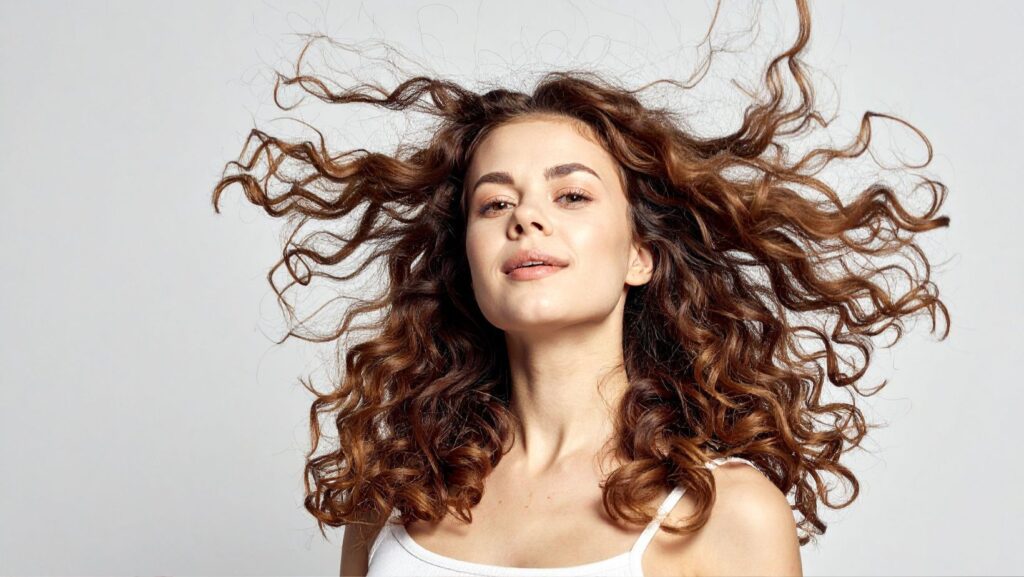
Curly hair often looks different day to day. On days you want extra volume or more uniform curls, curly clip in hair extensions can help you enhance your natural texture. They’re especially useful if:
- You have areas where your curls are looser or thinner.
- You want a fuller, more dramatic look for events or photos.
- You’re transitioning from heat damage and growing out your natural curls.
Remember: Curly hair looks its best when you prioritize hydration, avoid over-brushing when dry, and choose shapes that complement your curl pattern instead of fighting it.
5. Best Hairstyles for Straight Hair: Movement and Dimension
Straight hair can look sleek and sophisticated—but it can also appear flat or lifeless if the cut is too blunt or the length too long without shape. The goal is to introduce movement and dimension while keeping that naturally smooth finish.
Here’s a simple listing of ideas tailored to straight hair:
- Long, layered cut:
- Adds movement and flow to otherwise flat lengths.
- Works beautifully with face-framing layers.
- Classic blunt bob:
- Chin or jaw-length looks chic, bold, and modern.
- The straightness helps the line look crisp and sharp.
- “Airy” curtain bangs:
- Light bangs that split in the middle soften a straight, long cut.
- Easy to grow out and style with a round brush or flat iron.
- Sleek, extra-long styles:
- If your hair stays straight naturally, longer lengths can look expensive and polished.
- Just make sure to trim regularly to avoid thin, stringy ends.
Styling tips:
- Use a lightweight shine serum to emphasize sleekness.
- Blow-dry with the nozzle pointing downward for a smooth cuticle.
- Add soft bends at the ends with a flat iron for a “glass hair” effect that still moves.
Straight hair also pairs well with extensions for customizable length and volume. You can keep it natural and subtle for daily wear, then switch to a more dramatic extra-long look for special occasions.
6. How to Match Hairstyles, Lifestyle, and Extensions
No matter your hair type, the “best” hairstyle is the one that fits your texture, routine, and personality. Use these guidelines to refine your choice:
- If you style your hair quickly in the morning:
- Fine hair: Choose a blunt bob or lob that air-dries nicely.
- Thick hair: Medium length with long layers that can be thrown into buns or braids.
- Curly hair: A rounded or layered cut that looks good with wash-and-go styles.
- Straight hair: A simple layered cut with minimal styling needed.
- If you love glam looks for weekends or nights out:
- Practice one or two go-to styles (like a sleek high ponytail, half-up waves, or a soft updo).
- Use extensions to switch instantly between “everyday you” and “event-ready you.”
- If you want to experiment without commitment:
- Try clip-in bangs, clip-in layers, or full sets of extensions rather than making drastic permanent changes.
- Play with parting your hair differently, changing your styling products, or adding accessories before committing to a new cut.
Ultimately, fine, thick, curly, and straight hair each have their own beauty and styling potential. When you know what your hair type naturally does best—and how to support it with the right haircut, routine, and occasional help from extensions—you can stop fighting your hair and start highlighting what makes it unique.